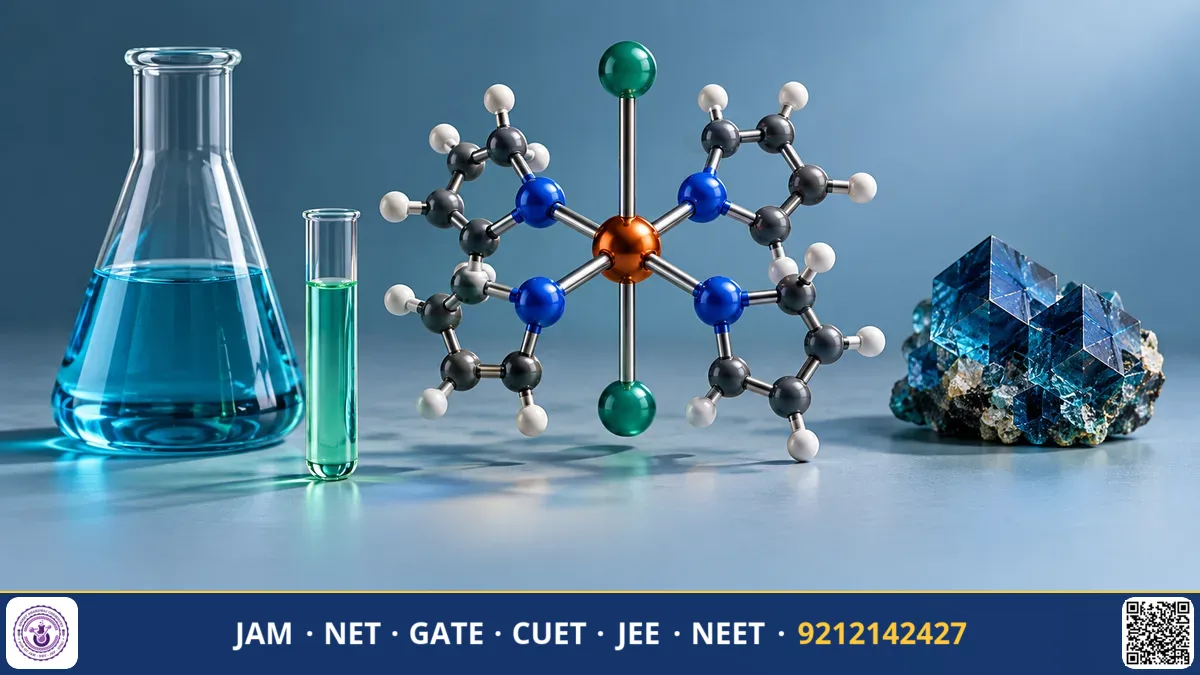

JEE Advanced Chemistry: Inorganic Problem Types and How to Approach Them
A comprehensive guide for Class 11-12 aspirants to master conceptual inorganic problem types, structural reasoning, and avoid negative marking in JEE Advanced.
Deconstructing the Rote Learning Myth in JEE Advanced Inorganic Chemistry
A widespread misconception among school students preparing for competitive engineering entrance examinations is that inorganic chemistry is solely an exercise in mechanical memorization (often referred to colloquially as रटना or rote learning). While early board preparation or baseline factual tests may reward simple recall of chemical formulas and colors, the Joint Entrance Examination (JEE) Advanced approaches the subject from a fundamentally different perspective.
In JEE Advanced, inorganic chemistry functions as an applied science rooted in physical principles. Problems rarely evaluate whether you have memorized an isolated reaction in isolation. Instead, questions examine your ability to synthesize foundational periodic principles, crystal field theory, thermodynamics, equilibrium concepts, and qualitative analysis into a logical deduction. An examination problem might ask you to track a sequence of color transformations, compute magnetic moments based on electronic configurations, deduce molecular geometry via orbital overlap, and evaluate disproportionation tendencies simultaneously.
Because the organizing Indian Institute of Technology (IIT) modifies the structural distribution of questions each year, there is no fixed mark distribution or rigid topic-wise weightage between branches of chemistry. Candidates should always refer to the official information brochure and examination syllabus published by the organizing body for the relevant year to verify formal test regulations. To build a robust personal strategy, students should analyze official past examinations independently rather than relying on unverified claims of predictable chapter weightages.
Primary Inorganic Problem Archetypes in JEE Advanced
To master inorganic chemistry at an advanced level, you must recognize the core analytical frameworks used by exam setters. Rather than viewing the syllabus as hundreds of disjointed reactions, group problems into distinct problem archetypes governed by unifying chemical principles.
1. Periodicity and Anomalous Electronic Properties
These questions test your understanding of how fundamental atomic attributes dictate macroscopic chemical behavior. Typical areas examined include:
- Shielding and Penetration Effects: Rationalizing anomalous ionization enthalpy values across periods and groups (for example, comparing beryllium with boron, or nitrogen with oxygen) using orbital penetration, electronic symmetry, and exchange energy.
- Relativistic and Contraction Effects: Examining the inert pair effect in heavier post-transition p-block elements (such as the relative stabilities of Tl+ versus Tl3+ or Pb2+ versus Pb4+), alongside the consequences of lanthanoid contraction on atomic radii and chemical similarity in 4d and 5d transition series (such as zirconium and hafnium).
- Lattice Energy versus Hydration Enthalpy: Explaining solubility trends and thermal stability of alkaline earth metal carbonates, sulfates, and hydroxides using polarizing power (Fajans' rules) and ionic radii differences.
2. Coordination Chemistry and Ligand Field Reasoning
Coordination compounds represent one of the most intellectually rigorous areas of the syllabus. JEE Advanced problems in this domain frequently combine structural geometry, stereochemistry, and electronic spectra:
- Crystal Field Splitting (Δo and Δt): Calculating crystal field stabilization energy (CFSE) and predicting whether a d4 through d7 central transition metal ion adopts a high-spin or low-spin configuration by comparing ligand field strength against pairing energy (P).
- Magnetic Properties and Spin-Only Moments: Calculating spin-only magnetic moments using the formula μ = √[n(n + 2)] Bohr Magnetons (BM), where n represents the number of unpaired electrons. Questions often set traps involving diamagnetic low-spin configurations (such as low-spin d6 complexes like [Co(NH3)6]3+) versus paramagnetic high-spin configurations (such as [CoF6]3-).
- Isomerism and Stereochemical Traps: Identifying structural and stereo-isomers for octahedral complexes of the types [Ma2b2c2], [M(AA)2b2], or [M(AB)3], checking for planes of symmetry to determine optical activity. A thorough understanding of coordination isomerism types with examples is essential to avoid missing subtle non-superimposable stereoisomers during counting questions.
- Synergic Bonding in Organometallics: Analyzing metal-carbon bond orders and infrared stretching frequencies in metal carbonyls, such as [Fe(CO)5] or [Ni(CO)4], based on back-donation from filled d-orbitals of the metal into vacant π* antibonding orbitals of carbon monoxide.
3. Qualitative Salt Analysis Reaction Cascades
Qualitative analysis (salt analysis) questions are often presented as reaction flowcharts or mystery cascades (Compound A reacts with reagent B to produce precipitate C, which dissolves in excess reagent to form clear solution D). These sequences evaluate:
- Amphoteric Behavior: Recognizing cations whose hydroxides dissolve in both excess acid and strong alkali (such as Zn2+, Al3+, Pb2+, and Sn2+ forming complex anions like [Zn(OH)4]2- or [Al(OH)4]-).
- Precipitation Equilibria and Solubility Product (Ksp): Rationalizing group separation in qualitative analysis, such as why Group II cations precipitate as sulfides in acidic medium (low S2- concentration due to common ion effect of H+ on H2S), while Group IV cations require alkaline medium.
- Confirmatory Diagnostic Tests: Understanding the precise chemistry behind classical tests, such as the chromyl chloride test (evolution of red-orange CrO2Cl2 vapors), the brown ring test for nitrates (formation of [Fe(H2O)5(NO)]2+), and the borax bead test (metaborate formation).
4. Structural Chemistry of p-Block Oxoacids and Halides
Questions evaluating oxoacid structures demand accurate drafting of Lewis diagrams, oxidation states, and non-metal connectivity:
- Phosphorus Oxoacids: Deducing the basicity and reducing character of H3PO2, H3PO3, and H3PO4 by counting ionizable P-OH bonds versus reducing P-H bonds.
- Peroxy and Bridging Linkages: Identifying peroxy bonds (such as in peroxodisulfuric acid, H2S2O8, and Caro's acid, H2SO5) and oxygen-bridged linkages (such as in pyrosulfuric acid, H2S2O7), which directly affect formal oxidation states.
- Multicenter Bonding: Analyzing three-center two-electron (3c-2e) "banana" bonds in diborane (B2H6) and back-bonding (pπ-pπ vs pπ-dπ) phenomena influencing the Lewis acid strengths of boron trihalides (BF3 < BCl3 < BBr3 < BI3).
| Problem Archetype | Core Governing Principles | Frequent Examination Pitfalls | Recommended Problem Strategy |
|---|---|---|---|
| Periodic Reasoning | Effective nuclear charge (Zeff), shielding parameters, orbital penetration, electronic exchange energy. | Assuming smooth linear trends down groups; ignoring 3d/4f transition and lanthanoid contraction. | Evaluate ionization energies and electron gains using subshell occupancy and structural configuration rather than group position alone. |
| Coordination Complexes | Ligand field theory, Δo vs pairing energy (P), d-orbital splitting, synergic π-backbonding. | Confusing dn electron configuration of ions with neutral atoms; miscalculating unpaired electrons in strong vs weak fields. | Write out metal oxidation state first, determine d-electron count, apply spectrochemical ranking, and draw d-orbital splitting. |
| Qualitative Analysis Flowcharts | Selective precipitation, solubility product (Ksp), complex ion formation equilibria, redox disproportionation. | Confusing precipitates that dissolve in excess ammonia versus excess sodium hydroxide; missing gas evolution characteristics. | Map out the flowchart step-by-step on scratch paper; trace oxidation state transitions at every reagent addition. |
| Oxoacids and Structural Geometry | VSEPR theory, hybridization, bridging bonds, peroxy linkages, formal oxidation states. | Assuming all hydrogen atoms in an oxoacid are acidic/ionizable; miscounting lone pairs on central or terminal atoms. | Sketch complete molecular skeletons showing all lone pairs; differentiate P-H (reducing) from P-OH (acidic) bonds explicitly. |
Navigating Multi-Correct Traps in Inorganic Chemistry
Questions featuring one or more than one correct option (multi-correct) represent both the highest scoring opportunity and the greatest source of negative marks in JEE Advanced. Test setters design incorrect options by modifying a single word, altering reaction conditions slightly, or blending true factual statements that do not address the core premise of the question.
Trap 1: Isoelectronic versus Isostructural Nuances
Examiners frequently challenge students with species that possess identical total electron counts but completely different geometric structures, or identical molecular geometry with distinct electron counts. For instance, consider the series CO32-, NO3-, and SO3. While all three are planar species possessing sp2 hybridization at the central atom, replacing a central atom with one possessing non-bonding lone pairs alters geometry completely. Always calculate both the steric number (bond pairs + lone pairs) and the total valence electron shell environment before declaring two species isostructural.
Trap 2: Reaction Conditions (Temperature and Concentration Dependence)
Inorganic transformations often diverge dramatically when concentration or temperature changes. A multi-correct option might state a generalized reaction outcome that is valid only under specific conditions:
- Halogen Reactions with Alkali: The reaction of chlorine with cold, dilute sodium hydroxide yields sodium chloride and sodium hypochlorite:
2NaOH (cold, dilute) + Cl2 → NaCl + NaOCl + H2O
However, when reacted with hot, concentrated sodium hydroxide, chlorine disproportionates into chloride and chlorate:
6NaOH (hot, concentrated) + 3Cl2 → 5NaCl + NaClO3 + 3H2O - Nitric Acid Oxidations: The reaction of copper metal with dilute nitric acid produces nitric oxide (NO) gas:
3Cu + 8HNO3 (dilute) → 3Cu(NO3)2 + 2NO + 4H2O
In contrast, reaction with concentrated nitric acid produces nitrogen dioxide (NO2) gas:
Cu + 4HNO3 (concentrated) → Cu(NO3)2 + 2NO2 + 2H2O
Failing to inspect whether the question specifies "cold and dilute" or "hot and concentrated" can lead to marking a false statement as true.
Trap 3: Magnetic Behavior and Temperature Invariance
Options describing magnetism frequently assert that a complex is diamagnetic without specifying the oxidation state or coordination geometry. Furthermore, students often overlook complexes that exhibit spin-crossover phenomena or temperature-dependent magnetic moments. Always confirm the exact oxidation state of the metal center before concluding its magnetic character. For example, nickel forms tetrahedral [NiCl4]2- (sp3, paramagnetic with two unpaired electrons) but square planar [Ni(CN)4]2- (dsp2, diamagnetic with zero unpaired electrons), despite nickel possessing an identical +2 oxidation state in both complexes.
Trap 4: Partial Marking Strategy and Risk Mitigation
Recent JEE Advanced patterns generally award partial marks for multi-correct questions where a student selects some, but not all, correct options without selecting any incorrect ones. However, marking even one incorrect option results in negative marks. When approaching these items:
- Verify your high-confidence options first using strict structural and thermodynamic rules.
- If an option hinges on an obscure exception or an unstated condition you cannot decisively verify, weigh the penalty of negative marks against the benefit of an extra mark.
- Never guess in multi-correct inorganic sections; guessing is mathematically unfavorable under standard partial marking regulations.
Matrix Match and Paragraph-Based Comprehensive Sets
Comprehension passages and matrix-matching questions often connect multiple chapters into a unified narrative. A typical advanced passage might describe a metallurgical extraction process, transition into the qualitative identification of the byproducts, and conclude with the coordination chemistry of the waste liquor.
When solving matching sets:
- Draft reactions independently: Do not look at Column II until you have annotated the items in Column I with their known oxidation numbers, geometric structures, or characteristic colors. Prematurely reading Column II creates confirmation bias.
- Use process of elimination systematically: Identify the most distinct or unique chemical property first (for example, an odd-electron paramagnetic gas like NO2 or a colored diamagnetic permanganate ion MnO4-) to eliminate multiple options across the grid.
- Verify edge cases: Check whether multiple entries in Column I can match a single entry in Column II (many-to-one mapping), which is standard practice in JEE Advanced.
To master these complex formats, students should regularly solve structured problem sets from verified previous year papers under timed conditions, following up with simulated testing using standardized test papers.
Step-by-Step Strategic Framework for Daily Preparation
A structured approach ensures that factual data transforms into durable conceptual knowledge:
- Anchor Preparation in NCERT: Begin every topic by thoroughly reading the relevant NCERT chapters. Pay meticulous attention to footnotes, tables of physical constants (such as bond lengths, ionization energies, and standard reduction potentials), and anomalous trends explicitly discussed in the text.
- Maintain a Deductive Reasoning Journal: Whenever you encounter an unexpected reaction or anomalous trend, write down the fundamental physical explanation (such as orbital shielding, relativistic effects, hydration enthalpy, or entropy changes) rather than merely writing the reaction itself.
- Draw All Chemical Structures by Hand: Do not simply look at printed diagrams. Draw every oxoacid, interhalogen compound, silicate, and coordination complex manually, displaying all bonding pairs, lone pairs, formal charges, and coordination bonds clearly.
- Integrate Qualitative Analysis with Block Chemistry: Do not treat salt analysis as a detached appendix. When studying iron in the d-block, simultaneously master the identification reactions of Fe2+ and Fe3+. When studying nitrogen compounds, master the brown ring test and nitrate equilibria. Utilizing organized study material that cross-references these principles accelerates retention.
Frequently Asked Questions
Can I master JEE Advanced Inorganic Chemistry solely by memorizing NCERT?
NCERT provides the foundational factual baseline, and every reaction or compound mentioned within it is essential syllabus material. However, JEE Advanced routinely tests the conceptual application, multi-step equilibria, and structural reasoning that build upon those facts. Relying exclusively on passive memorization of NCERT without practicing advanced-level analytical questions and qualitative flowcharts leaves you unprepared for multi-concept problem types.
How should I approach qualitative salt analysis to avoid confusing colors and precipitates?
Instead of memorizing colors in isolation, classify precipitates by their chemical families (such as basic hydroxides, insoluble sulfides, halides, and carbonates). Group cations by their solubility product characteristics and learn which specific complexes form upon adding excess reagent (such as ammonia or caustic soda). Structuring your notes as decision trees or flowcharts based on reaction mechanisms makes the colors logical consequences of chemical identity.
Why are multi-correct questions considered particularly challenging in Inorganic Chemistry?
Multi-correct questions in inorganic chemistry frequently present statements that are partially true under standard conditions but invalid under the specific conditions stated in the question stem (such as varying temperature, concentration, or solvent). Because selecting a single incorrect option triggers negative marks under the examination's marking rules, students who rely on approximations or incomplete reading frequently lose marks.
How does Crystal Field Theory (CFT) connect to magnetic and optical properties in problem solving?
Crystal Field Theory explains the splitting of degenerate d-orbitals into different energy levels (such as t2g and eg in octahedral fields) under the electrostatic influence of surrounding ligands. The magnitude of this splitting parameter relative to the electron pairing energy determines whether the complex is high-spin or low-spin, which directly dictates the number of unpaired electrons (and thus the magnetic moment) as well as the wavelength of light absorbed during d-d transitions (which dictates visible color).
What is the most effective way to revise inorganic chemistry before full-length mock examinations?
Review your personal deductive reasoning notes, focusing on structural diagrams, oxidation state trends, and periodic anomalies rather than re-reading entire textbooks. Spend focused time solving mixed-chapter question sets that force your brain to transition rapidly between coordination chemistry, p-block reactions, and qualitative analysis.
How should I manage partial marking in multi-correct inorganic questions when uncertain?
If you are confident about two options but genuinely uncertain about a third option, it is generally wiser to mark only the verified options and secure partial credit rather than risk a speculative choice. Under standard JEE Advanced partial marking rules, a single incorrect selection turns an otherwise positive score into negative marks.
Preparing for Class 11-12 Chemistry and entrance exams?
ABC Chemistry runs Class 11-12 Chemistry coaching and entrance preparation, in class and through live online classes.
Call / WhatsApp: 9212142427