






Hydrocarbons (Class 11): Alkanes, Alkenes and Alkynes in One Framework
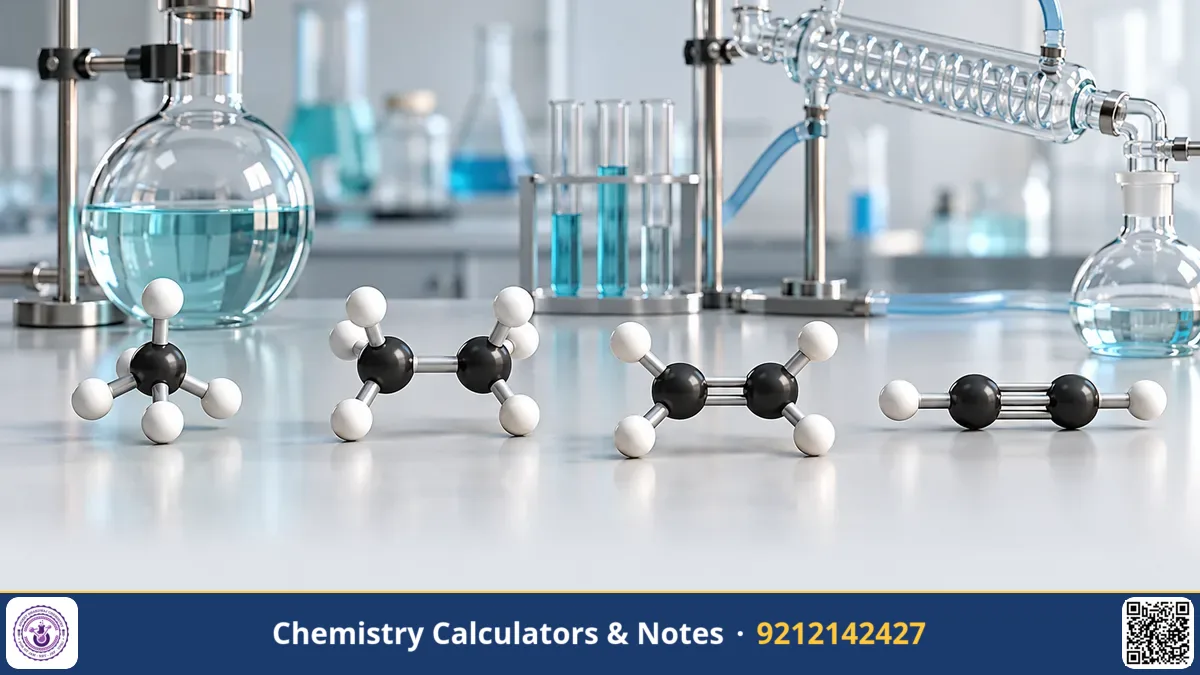
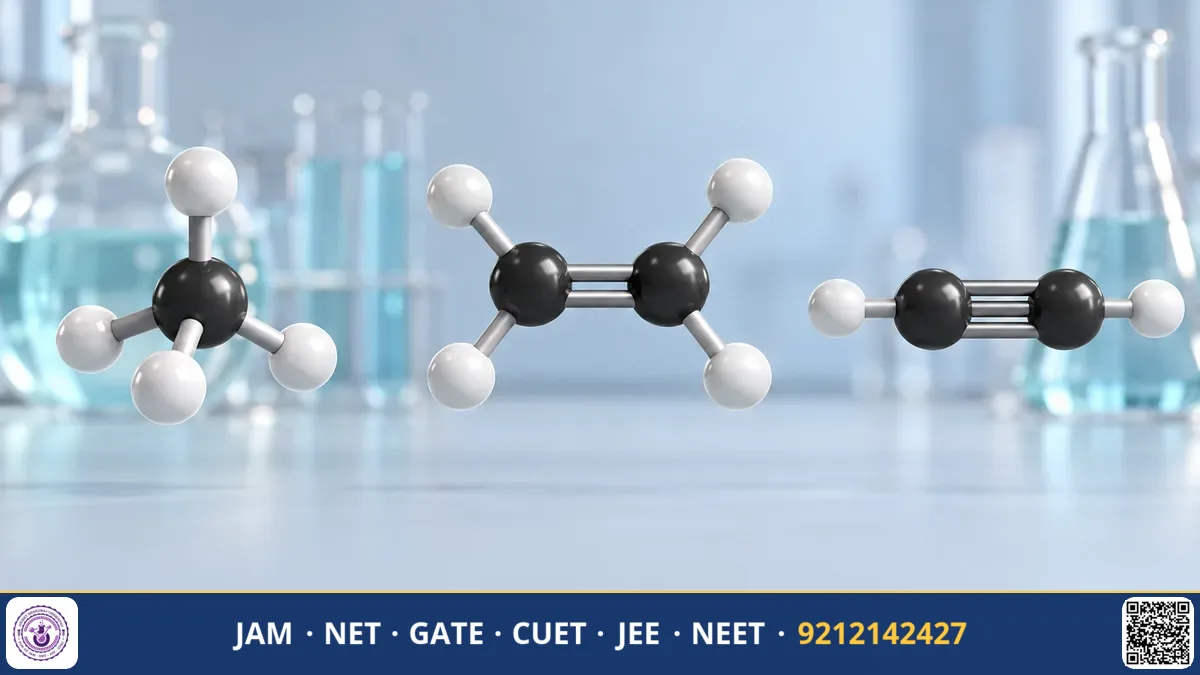
Saturated carbon has nothing to offer an electrophile, so alkanes substitute. Unsaturated carbon has a loose π cloud, so alkenes and alkynes add. Everything else in the chapter follows from that difference.
Class 11 · Organic Chemistry · Boards + JEE + NEET · Published 27 August 2026
Why the three families behave differently
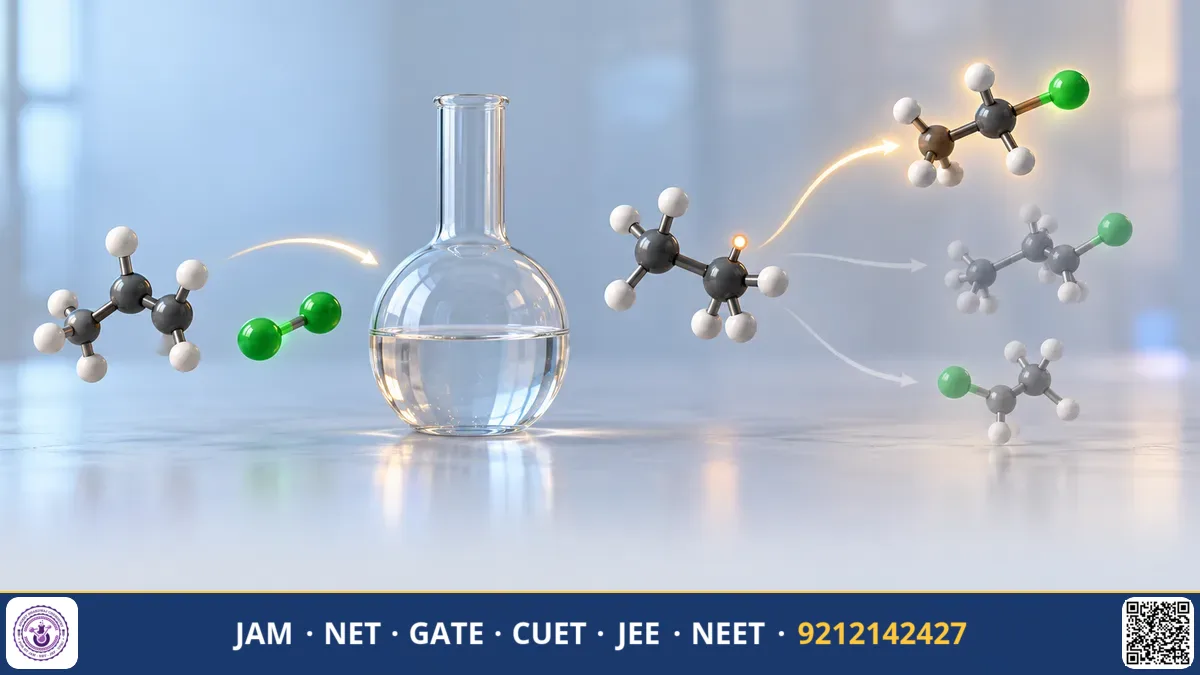
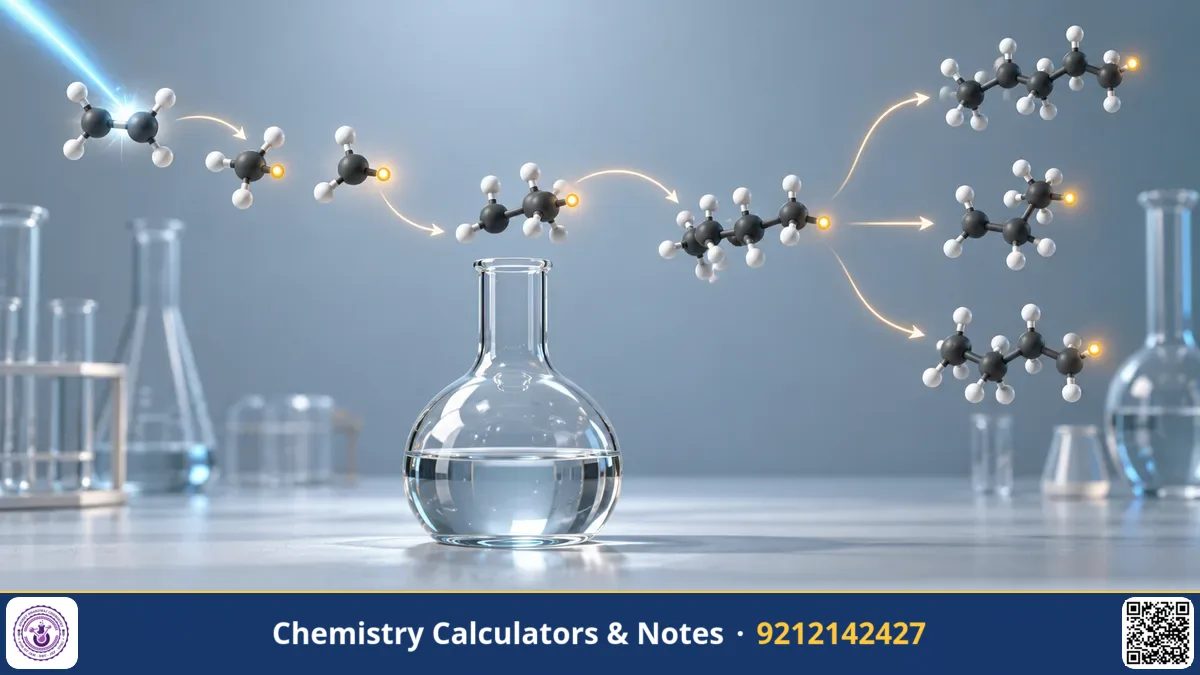
An alkane has only σ bonds, all of them strong and none of them electron rich, so nothing attracts an electrophile. It reacts only when a radical is generated, which is why halogenation needs UV light and gives a mixture. An alkene carries a π bond sitting above and below the carbon framework, loosely held and highly available — so electrophiles attack it readily and the reaction is addition, not substitution.
| Family | Typical reaction | Conditions | Distinguishing test |
|---|---|---|---|
| Alkane | Free-radical substitution | UV light or heat | No reaction with Br2 water in the dark |
| Alkene | Electrophilic addition | Room temperature | Decolourises Br2 water and Baeyer’s reagent |
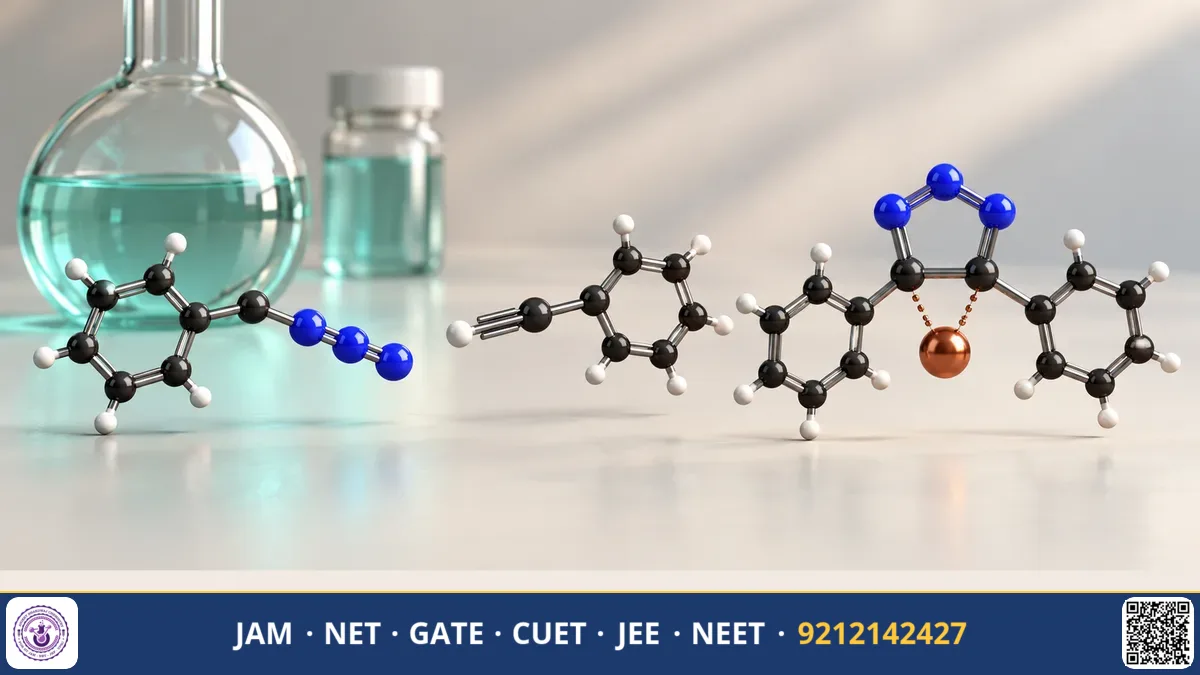
| Alkyne (terminal) | Electrophilic addition; acidic C–H | Room temperature | White precipitate with ammoniacal AgNO3 |
Markovnikov, and the peroxide exception
When HX adds to an unsymmetrical alkene, the hydrogen goes to the carbon that already has more hydrogens. The reason is worth stating in the answer rather than just the outcome: protonation happens at whichever carbon leaves the more stable carbocation, and the tertiary or secondary cation wins. In the presence of peroxides, HBr — and only HBr — adds the other way round, because the mechanism switches to free radical and the more stable radical now decides. Students routinely apply the peroxide effect to HCl and HI, where it does not occur.
Aromatic hydrocarbons, briefly
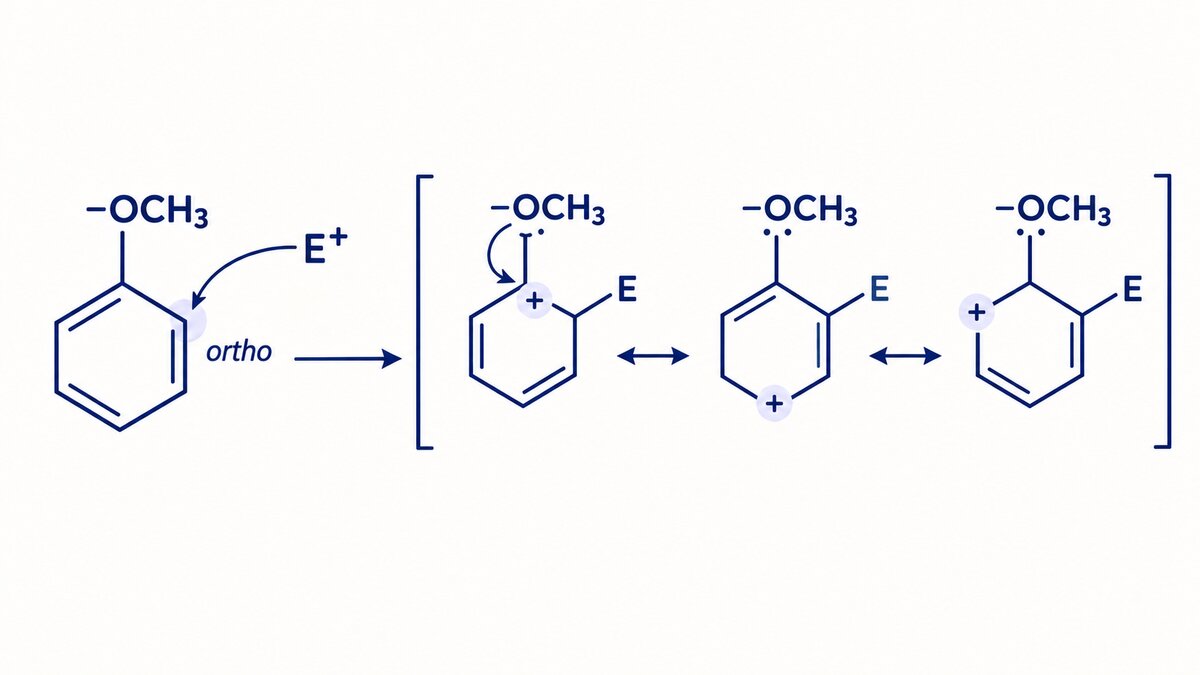
Benzene is unsaturated but does not add, because addition would destroy the aromatic stabilisation. It substitutes instead, and the directing effect of an existing substituent is examined constantly: activating groups direct ortho and para, deactivating groups direct meta — with the halogens as the standard exception, deactivating yet ortho-para directing.
What to practise
- Five Markovnikov additions and two peroxide-effect cases, written with the carbocation or radical shown.
- The three distinguishing tests, including what a negative result looks like.
- Directing effects on a mono-substituted benzene, at least six substituents.
FAQs
Why does the peroxide effect work only with HBr?
Because only for HBr are both propagation steps of the radical chain energetically favourable. With HCl one step is too endothermic and with HI one step is too exothermic to sustain the chain, so both add by the normal Markovnikov route regardless of peroxides.
Why does benzene not decolourise bromine water?
Because addition would break the delocalised aromatic system and cost more energy than the reaction releases. Benzene therefore substitutes rather than adds, and needs a catalyst such as FeBr3 to do so.
How do I tell an alkene from an alkyne experimentally?
Both decolourise bromine water, so that does not separate them. Ammoniacal silver nitrate gives a white precipitate with a terminal alkyne and nothing with an alkene, which is the reliable distinction.
Is Markovnikov’s rule worth memorising?
The outcome is easy to remember, but examiners increasingly ask for the reason. Answering through carbocation stability earns full marks and also handles the peroxide case correctly, which pure memorisation does not.
Need help with this chapter?
ABC Chemistry teaches Class 11 and 12 Chemistry and Maths through live online classes and group batches. For home tuition, see Great Home Tutor.
Call / WhatsApp: +91 92121 42427Related reading: Electrophilic Addition to Alkenes: Regiochemistry and Stereochemistry