




Chemical Bonding Class 11: Concept Map and Common Mistakes
A concept map of Class 11 chemical bonding, the mistakes that repeat, two worked practice questions and a one-week study plan for PG chemistry entrance exams.
This post gives you one map of Class 11 chemical bonding, the mistakes that repeat year after year, and two worked practice questions.
Use it to revise the topic before you move to PG-level inorganic and physical chemistry.
The concept map in one table
Do not study bonding as a list of chapters. Study it as a set of tools. Each tool answers one kind of question.
| Question asked | Tool to use | Typical trap |
|---|---|---|
| Is the bond ionic or covalent? | Electronegativity difference, lattice enthalpy, polarisation of the anion | Treating ionic and covalent as two separate boxes. Most bonds sit in between. |
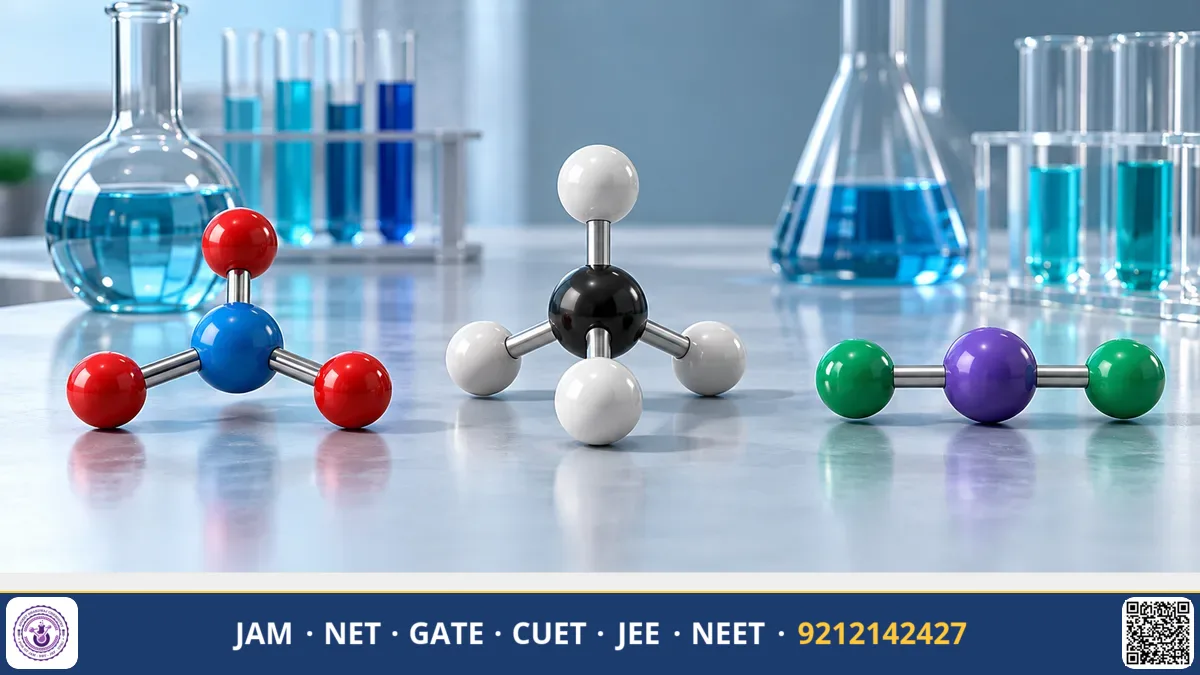
| What is the shape? | Electron pair repulsion: count all electron pairs, then place the lone pairs | Counting only bond pairs and forgetting lone pairs. |
| Which orbitals are mixed? | Hybridisation, taken from the steric number (bond pairs plus lone pairs on the central atom) | Reading hybridisation from the shape of the molecule. |
| Is it polar overall? | Bond dipoles added as vectors | Calling a molecule polar just because its bonds are polar. |
| Bond order, length, magnetism? | Molecular orbital theory | Using the wrong energy order of orbitals. |
| Why do boiling point, solubility and volatility differ? | Intermolecular forces and hydrogen bonding | Confusing a hydrogen bond with a covalent bond. |
Read the table row by row. If you cannot name the tool for a question quickly, that row is your weak area.
Common mistakes that repeat
These are the errors I correct most often in students who already know the theory. Check yourself against each one.
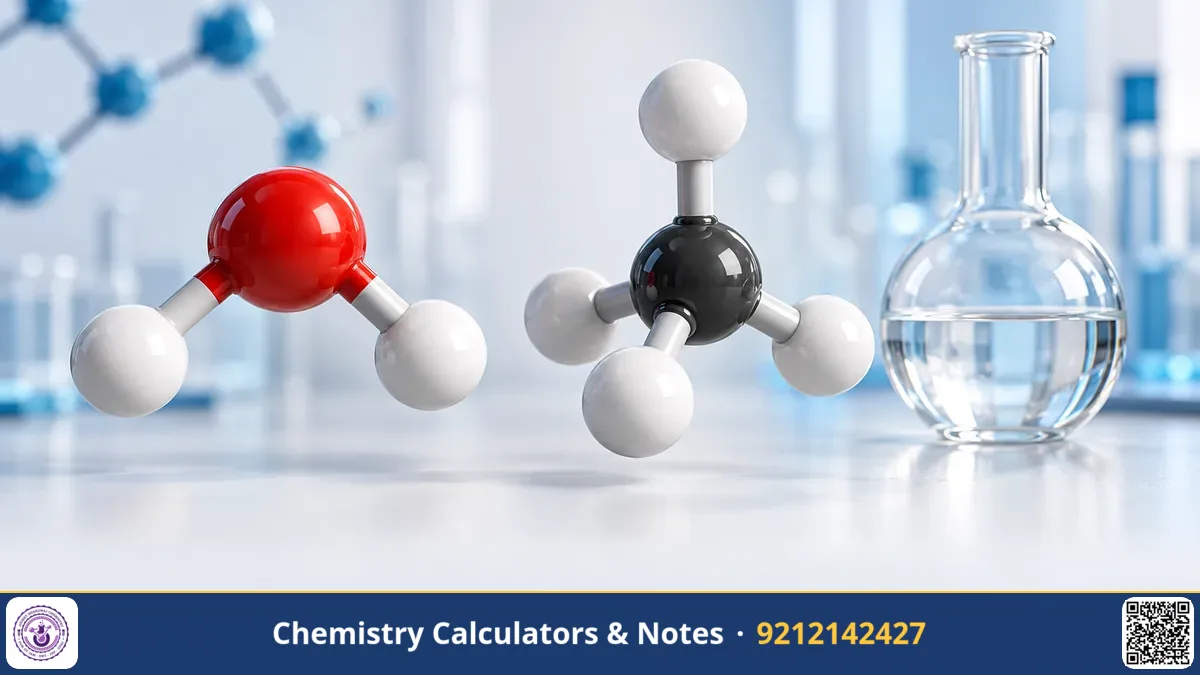
- Hybridisation from shape. Water is bent, but oxygen is sp3, not sp2. Count the steric number first. The shape comes after the lone pairs are placed.
- Ignoring lone pairs in shape. A lone pair repels more than a bond pair. That is why bond angles shrink from methane to ammonia to water.
- Wrong molecular orbital order. For B2, C2 and N2, the π(2p) orbitals lie below σ(2p). From O2 onwards the order reverses. The cause is mixing of 2s and 2p orbitals in the lighter molecules.
- Not adjusting electrons for charge. For O2+, remove one electron. For O2-, add one. Then count.
- Polar bonds mean polar molecule. Carbon dioxide has polar bonds but zero net dipole moment, because the two dipoles cancel in a linear shape.
- Treating hydrogen bonding as a covalent bond. It is a weaker attraction between molecules or between parts of a molecule. It changes physical properties, not molecular formulae.
- Intramolecular versus intermolecular hydrogen bonding. Bonding inside one molecule, as in ortho-nitrophenol, makes it more volatile than the para isomer, where the bonding is between molecules.
- Expanded octet in period 2. Boron, carbon, nitrogen, oxygen and fluorine have no d orbitals in the valence shell. They cannot expand the octet. Phosphorus and sulphur can.
- Mixing formal charge and oxidation state. Formal charge assumes equal sharing of electrons. Oxidation state assumes the more electronegative atom takes all of them.
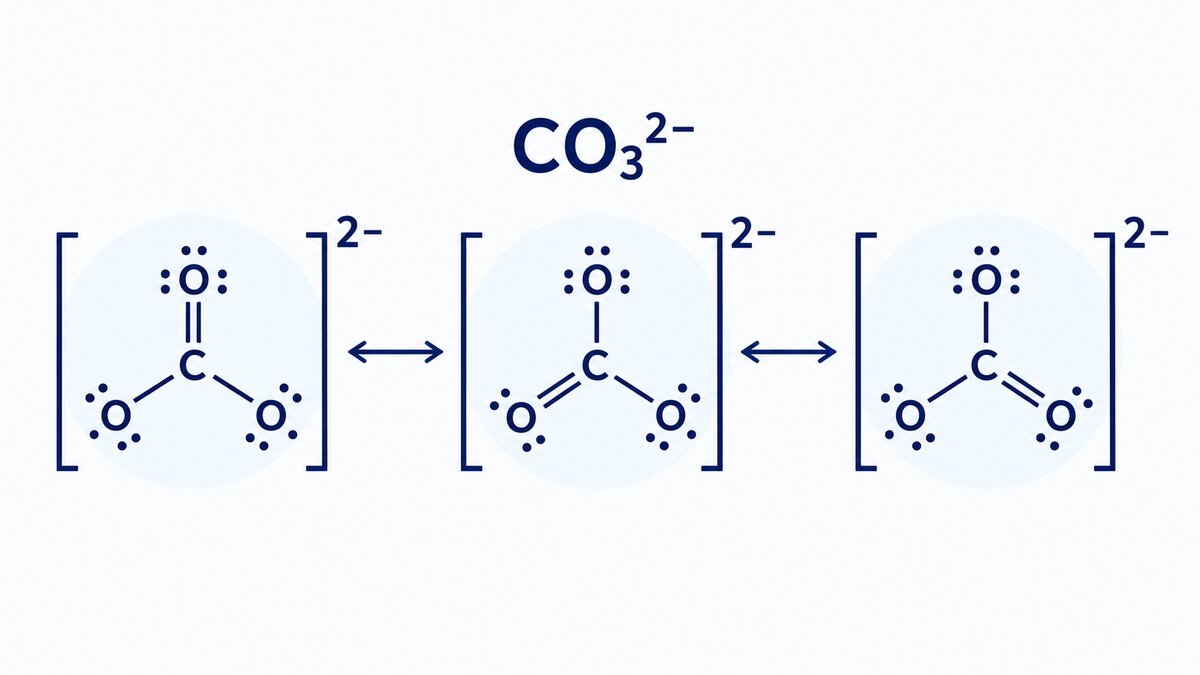
- Resonance as flipping. A molecule does not switch between structures. The real molecule is one hybrid, and it is more stable than any single drawing.
How the exam asks about bonding
In CSIR-NET, GATE, IIT-JAM and CUET-PG, bonding rarely appears as a plain definition. It appears inside other questions. A question on a main-group compound may really test shape and hybridisation. A question on a diatomic ion may really test molecular orbital filling.
So prepare for three patterns:
- Shape and polarity of a molecule or ion, especially with lone pairs on the central atom.
- Bond order, bond length and magnetic behaviour of diatomic species and their ions.
- Comparison of properties, such as boiling point, bond angle, bond length or solubility across a series.
Syllabi differ between exams and universities, and they change. Check the current syllabus on the official page of the exam or university before you decide how deep to go.
The NCERT Class 11 chapter is your base. Read it fully once, with the diagrams. Then move to problems, because the exam tests application, not recall.
Practice question 1: bond order and magnetism
These two questions are written by me for practice. They are not past-paper questions.
Question. Arrange O2+, O2, O2- and O22- in increasing order of bond length. Which of them are paramagnetic (attracted by a magnetic field because of unpaired electrons)?
Step 1: count valence electrons. O2 has 12 valence electrons. O2+ has 11. O2- has 13. O22- has 14.
Step 2: use the O2 order. σ(2s), σ*(2s), σ(2p), π(2p), π*(2p), σ*(2p). Fill the electrons in this order. The π*(2p) pair can hold four electrons.
Step 3: bond order = (bonding − antibonding) / 2.
- O2+: 8 bonding, 3 antibonding. Bond order 2.5. One unpaired electron.
- O2: 8 bonding, 4 antibonding. Bond order 2. Two unpaired electrons.
- O2-: 8 bonding, 5 antibonding. Bond order 1.5. One unpaired electron.
- O22-: 8 bonding, 6 antibonding. Bond order 1. No unpaired electron.
Answer. A higher bond order means a shorter bond. So the increasing bond length order is O2+ < O2 < O2- < O22-. Paramagnetic species: O2+, O2 and O2-. O22- is diamagnetic.
Notice what made this easy: you changed the electron count first, and only then filled the orbitals.
Practice question 2: shape, hybridisation and polarity
Question. Give the shape, hybridisation and polarity of XeF4 and SF4. Explain why one is polar and the other is not.
XeF4. Xenon has 8 valence electrons. Four are used for four Xe–F bonds. The remaining four form two lone pairs. Steric number = 4 + 2 = 6. That gives sp3d2 hybridisation and an octahedral arrangement of electron pairs. The two lone pairs sit opposite each other, to reduce repulsion. The four fluorine atoms are left in one plane, so the shape is square planar. The four bond dipoles cancel. XeF4 is non-polar.
SF4. Sulphur has 6 valence electrons. Four are used for four S–F bonds. The remaining two form one lone pair. Steric number = 4 + 1 = 5. That gives sp3d hybridisation and a trigonal bipyramidal arrangement of electron pairs. The lone pair takes an equatorial position, where it has fewer close neighbours at right angles. The shape is see-saw. The bond dipoles do not cancel, so SF4 is polar.
Answer. XeF4: square planar, sp3d2, non-polar. SF4: see-saw, sp3d, polar.
The same method works for any central atom: valence electrons, bond pairs, lone pairs, steric number, arrangement, then shape. Do not skip steps.
A short study plan
Take about a week of focused evenings. Adjust it to your own pace.
- Day 1: Read the NCERT chapter once. Redraw the concept map table from memory.
- Day 2: Practise shape and hybridisation on many species, including ions and those with lone pairs.
- Day 3: Learn both molecular orbital orders. Write them on one page and note which molecules use which.
- Day 4: Solve bond order and magnetism for diatomic ions until the counting is automatic.
- Day 5: Work on polarity, dipole moment and bond angle comparisons.
- Day 6: Revise hydrogen bonding and its effect on physical properties.
- Day 7: Attempt mixed questions under time. Write down every mistake from the list above that you repeat.
ABC Chemistry has a question bank by chapter. Use any chapter-wise set the same way: attempt first, check later, and log the reason for each wrong answer.
Key takeaways
- Pick the tool by the question: electron pair repulsion for shape, steric number for hybridisation, molecular orbital theory for bond order and magnetism.
- Always count lone pairs before naming shape or hybridisation.
- For ions, adjust the electron count first, then fill molecular orbitals in the correct order.
- Polar bonds do not guarantee a polar molecule. Check the geometry.
- Keep a mistake log. Repeated errors, not new topics, usually cost the marks.
Frequently asked questions
Is Class 11 bonding enough for PG entrance exams?
It is the base, not the whole. PG-level papers apply the same ideas to larger main-group and transition-metal species. If the base is weak, those questions become guesswork.
Why does the molecular orbital order change from N2 to O2?
In the lighter molecules, the 2s and 2p orbitals are close in energy and mix. This pushes σ(2p) above π(2p). In O2 and beyond, the gap is larger, so the mixing is weaker and σ(2p) lies below π(2p).
Can I decide hybridisation without drawing the structure?
Yes. Count the valence electrons, work out bond pairs and lone pairs on the central atom, and add them to get the steric number. Then match the number to the hybridisation.
Why are lone pairs placed equatorially in a trigonal bipyramidal arrangement?
In the equatorial position, a lone pair has fewer close neighbours at right angles. Repulsion is lower, so the structure is more stable.
Does resonance mean the molecule keeps changing?
No. The molecule has one real structure, called the resonance hybrid. The drawn structures are only our way of describing it on paper.