






Isolobal Analogy in Organometallic and Organic Chemistry
Master the isolobal analogy connecting metal and organic fragments. Learn frontier orbital mapping with worked practice questions and a study plan.
This guide explains how to connect transition metal fragments with organic units using frontier molecular orbital principles.
You will learn orbital mapping rules, review two worked practice questions, and apply a structured study plan for chemical science examinations.
Principles of the isolobal analogy
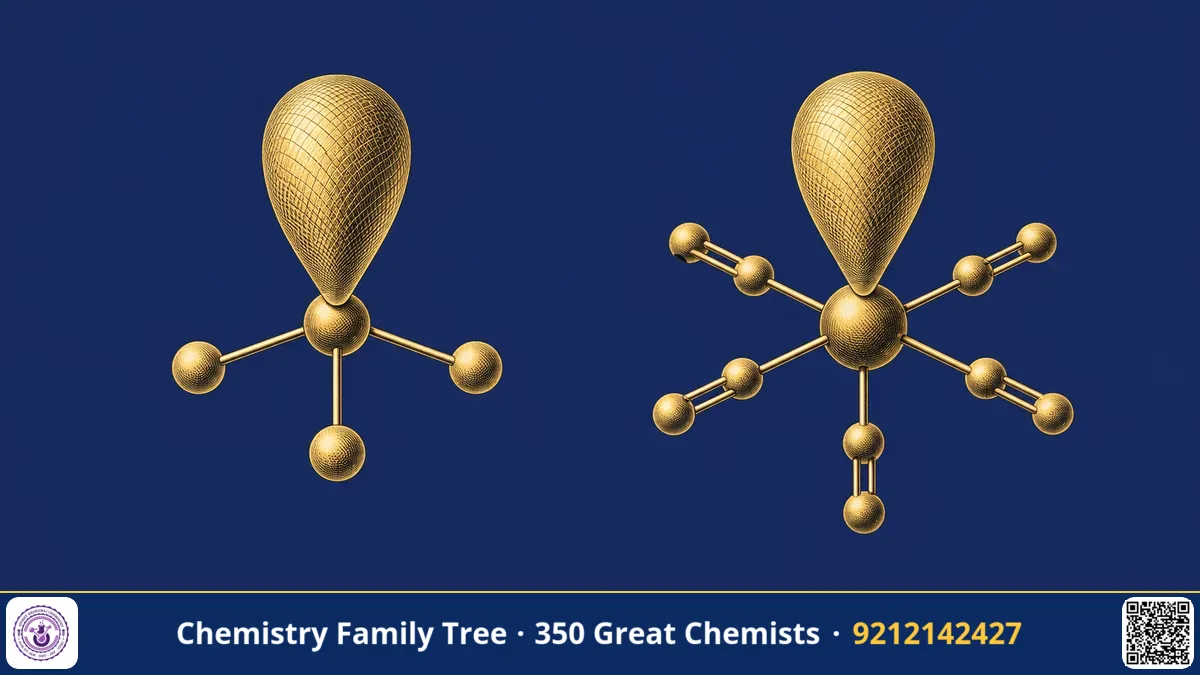
The isolobal principle connects inorganic complexes with organic structures. Formulated by Roald Hoffmann, who shared the 1981 Nobel Prize in Chemistry with Kenichi Fukui, the concept states that molecular fragments are isolobal if the number, symmetry properties, approximate energy, and shape of their frontier orbitals and the number of electrons in them are similar. They are similar, not identical.
Frontier orbitals include the highest occupied molecular orbital (HOMO) and the lowest unoccupied molecular orbital (LUMO). Matching frontier orbitals enable fragments to form comparable bonds and substitute for one another in chemical frameworks. A double-headed arrow with half an orbital lobe underneath denotes this relationship.
Distinguish isolobal units from isoelectronic species. Isoelectronic species share identical valence electron counts and structures. Isolobal fragments do not require identical total electron counts; they only require matching frontier orbital characteristics that govern bonding.
Constructing fragments from octahedral complexes
To construct an isolobal fragment, start from an electronically saturated precursor where bonding and nonbonding orbitals are filled and antibonding orbitals remain empty. In main-group chemistry, methane satisfies the octet rule. Cleaving one carbon-hydrogen bond leaves a methyl radical, CH3, with one directed frontier orbital. Removing a second hydrogen yields methylene, CH2, with two frontier orbitals. Removing a third produces methyne, CH, with three frontier orbitals.
In organometallic chemistry, an octahedral ML6 complex serves as the eighteen-electron precursor. The neutral complex has two-electron Lewis base ligands and a d6 metal center. Cleaving metal-ligand bonds uncovers directed frontier orbitals pointing toward vacated coordination sites:
- ML5 fragments: Removing one ligand generates one directed frontier orbital. A neutral d7 ML5 unit like Mn(CO)5 carries one frontier electron, making it isolobal to CH3.
- ML4 fragments: Removing two cis ligands gives two frontier orbitals. A neutral d8 ML4 unit like Fe(CO)4 holds two frontier electrons, making it isolobal to CH2.
- ML3 fragments: Removing three facial ligands exposes three frontier orbitals. A neutral d9 ML3 unit like Co(CO)3 holds three frontier electrons, matching methyne, CH.
| Precursor | Metal unit | Metal d count | Frontier orbitals | Main-group unit | Frontier electrons |
|---|---|---|---|---|---|
| Octahedral ML6 | Mn(CO)5 | d7 | 1 | CH3 | 1 |
| Octahedral ML6 | Fe(CO)4 | d8 | 2 | CH2 | 2 |
| Octahedral ML6 | Co(CO)3 | d9 | 3 | CH | 3 |
| Octahedral ML6 | Mo(CO)5− | d7 | 1 | CH3 | 1 |
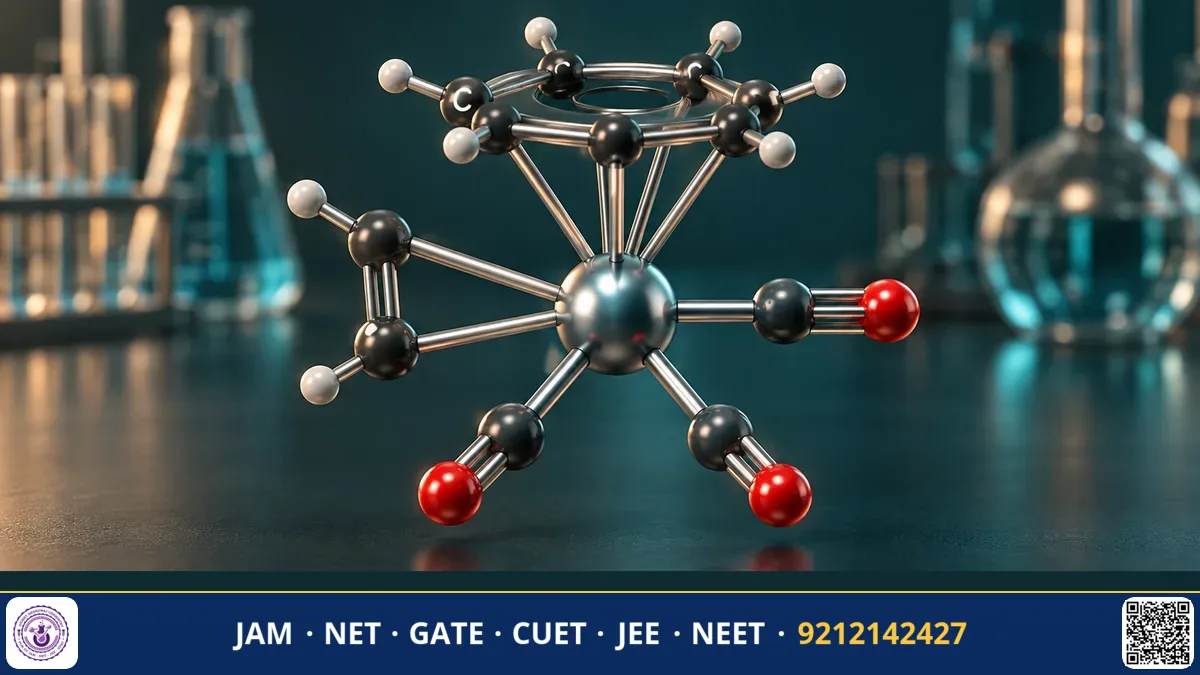
Charged fragments follow identical rules. Anionic Mo(CO)5− has seven d electrons and one frontier orbital, making it isolobal to neutral Mn(CO)5 and CH3.
Exam perspective and practice question 1
Isolobal relationships appear regularly in master's entrance and fellowship tests, including CSIR NET Chemical Science, GATE Chemistry (CY), IIT-JAM Chemistry, and CUET-PG Chemistry. Examiners test these concepts through fragment matching and cluster substitution questions. Practice drills in the chemistry question bank help build speed with these conversions.
Practice question 1 (question bank drill 1): Which of the following transition metal carbonyl fragments is isolobal to the methyne fragment, CH?
- Fe(CO)4
- Co(CO)3
- Mn(CO)5
- Ni(CO)4
Step-by-step solution:
Carbon provides 4 valence electrons and hydrogen donates 1, giving five valence electrons for CH. Because CH requires three electrons to achieve an octet, it has three frontier orbitals containing three electrons.
An octahedral precursor with eighteen electrons must lose three facial ligands to expose three frontier orbitals. To supply three electrons in those orbitals, the resulting ML3 fragment requires a d9 metal center with three two-electron carbonyl ligands, giving fifteen total valence electrons.
Evaluate the options:
- Fe(CO)4: Iron contributes 8 electrons and four carbonyl ligands donate 8 electrons, giving sixteen total valence electrons (d8 ML4, two frontier orbitals, isolobal to CH2).
- Co(CO)3: Cobalt contributes 9 electrons and three carbonyl ligands donate 6 electrons, giving fifteen total valence electrons (d9 ML3, three frontier orbitals, matches CH).
- Mn(CO)5: Manganese contributes 7 electrons and five carbonyl ligands donate ten electrons, giving seventeen total valence electrons (d7 ML5, one frontier orbital, isolobal to CH3).
- Ni(CO)4: Saturated eighteen-electron molecule with zero exposed frontier orbitals.
Therefore, Co(CO)3 is isolobal to CH. The correct choice is option 2.
Practice question 2: Cluster vertex substitution
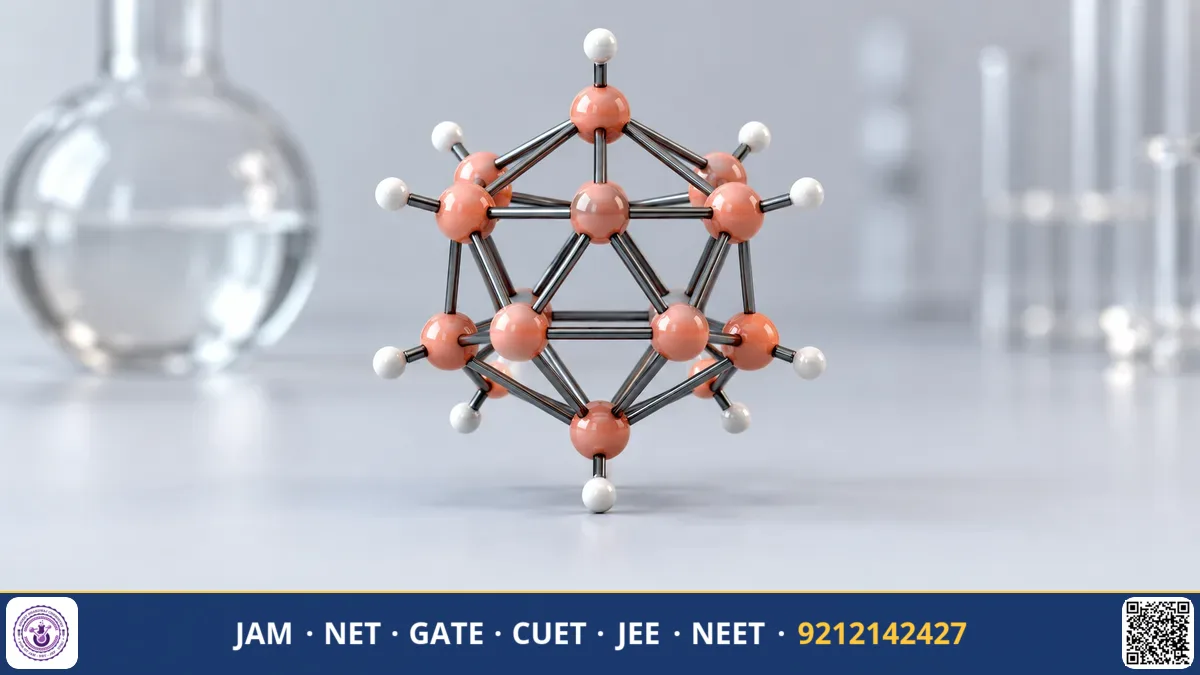
Practice question 2 (question bank drill 2): The tetrahedral cluster Co4(CO)12 undergoes vertex substitution where two Co(CO)3 vertices are replaced by two CR units, forming Co2(CO)6(CR)2. Explain why the tetrahedral geometry remains conserved.
Step-by-step solution:
Polyhedral cluster geometry depends on the number of skeletal electron pairs binding framework vertices.
For Co(CO)3, cobalt has 9 valence electrons and three carbonyl ligands donate 6 electrons, totaling fifteen valence electrons. Metal vertices dedicate twelve electrons to non-skeletal duties. Subtracting twelve leaves three skeletal electrons. The unit supplies three frontier orbitals pointing toward the cluster core.
For CR, carbon has 4 valence electrons and the alkyl group contributes 1 electron, giving five valence electrons. Main-group vertices dedicate two electrons to the exo bond. Subtracting two leaves three skeletal electrons. The unit supplies three frontier orbitals directed into the cluster.
Because Co(CO)3 and CR each supply three frontier orbitals and three skeletal electrons, replacing two metal vertices with two organic units causes no change in skeletal electron count. The tetrahedral geometry is conserved.
Structured study plan for chemical science entrance tests
Follow this four-stage study routine to master isolobal relationships:
- Stage 1: Map frontier orbital geometries. Practice drawing frontier orbitals for ML5, cis-ML4, and facial ML3 fragments to recognize spatial directions.
- Stage 2: Practice d electron counting. Calculate metal d electron counts for neutral fragments and charged species like Mo(CO)5−.
- Stage 3: Work on cluster vertex substitutions. Solve vertex exchange problems in metal carbonyl clusters, verifying that skeletal electron counts match.
- Stage 4: Timed chapter practice. Solve chapter-wise drills in the chemistry question bank to build speed for test day.
Key takeaways
- Isolobal fragments share similar number, symmetry, approximate energy, shape, and electron occupancy in their frontier orbitals.
- Octahedral ML6 precursors generate directed frontier orbitals as ligands are removed from the metal center.
- A d7 ML5 unit maps to CH3, a d8 ML4 unit maps to CH2, and a d9 ML3 unit maps to CH.
- Vertex substitution with an isolobal fragment preserves the cluster skeletal electron count and cage geometry.
- Chapter-wise practice in the chemistry question bank improves problem-solving speed for competitive exams.
Frequently asked questions
What does the isolobal symbol represent?
The isolobal symbol is a double-headed arrow with half an orbital lobe underneath. It indicates that two fragments have similar frontier orbitals and electron occupancy, without requiring identical chemical composition or total electron counts.
How do isolobal fragments differ from isoelectronic species?
Isoelectronic species share identical valence electron counts and structures. Isolobal fragments share matching frontier molecular orbitals, while their total valence electron counts can differ substantially.
Can charged metal complexes be isolobal to neutral organic units?
Yes. The analogy depends on frontier orbital symmetry and electron count rather than formal charge. For example, anionic Mo(CO)5− has seven d electrons and one frontier orbital, making it isolobal to neutral CH3.
Why are frontier orbitals critical in organometallic reactivity?
Frontier orbitals, including the highest occupied and lowest unoccupied molecular orbitals, govern how fragments donate, accept, or share electrons when forming new chemical bonds.