Q1 · 2000-2022 · 2 marks
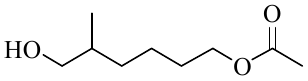
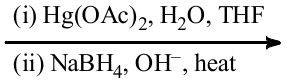
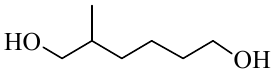
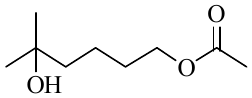
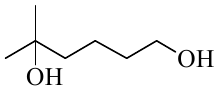
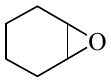
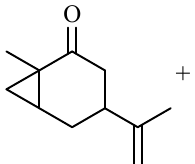
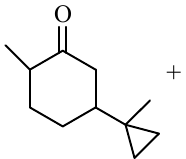
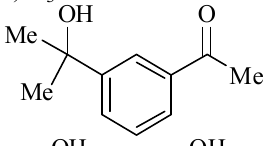
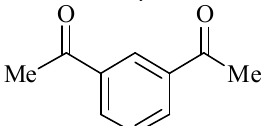
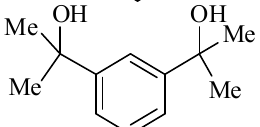
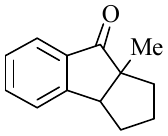
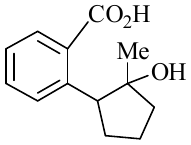
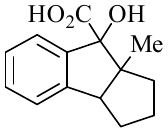
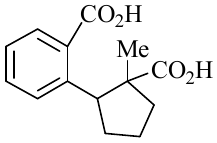
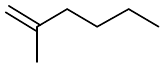
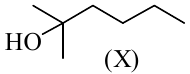
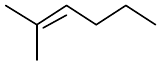
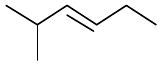
The major product obtained upon treatment of compound X with \mathrm{H}_{2} \mathrm{SO}_{4} at 80^{\circ} \mathrm{C} is:
Show answer
Answer: (c)
Report an error in ABC26OR0462
Q2 · 2000-2022 · 2 marks
In the carbylamine reaction, R-X is converted to R-Y via the intermediate Z. R-X, R-Y and Z, respectively, are
- (a) \mathrm{R}-\mathrm{NH}_{2}, \mathrm{R}-\mathrm{NC}, carbene
- (b) \mathrm{R}-\mathrm{NH}_{2}, \mathrm{R}-\mathrm{NC}, nitrene
- (c) \mathrm{R}-\mathrm{NC}, \mathrm{R}-\mathrm{NH}_{2}, carbene
- (d) \mathrm{R}-\mathrm{OH}, \mathrm{R}-\mathrm{NC}, nitrene
Show answer
Answer: (a)
Report an error in ABC26OR0464
Q3 · 2000-2022 · 2 marks
The photochemical reaction of 2-methylpropane with \mathrm{F}_{2} gives 2-fluoro-2-methylpropane and 1-fluoro-2-methylpropane in 14:86 ratio. The corresponding ratio of the bromo products in the above reaction using \mathrm{Br}_{2} is most likely to be
- (a) 14:86
- (b) 50:50
- (c) 1:9
- (d) 99:1
Show answer
Answer: (d)
Report an error in ABC26OR0465
Q4 · 2000-2022 · 2 marks
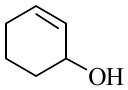
The major product of the following reaction is 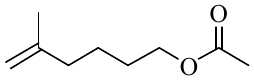
Show answer
Answer: (d)
Report an error in ABC26OR0466
Q5 · 2000-2022 · 2 marks
In the reaction sequence, 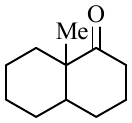

 the structure of the major product Z and the overall yield for its formation from the ketone X , are
- (a)
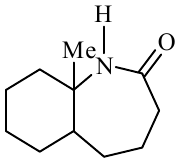 and 80\%
- (b)
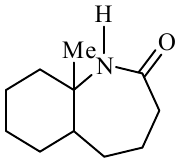 and 63 \%
- (c)
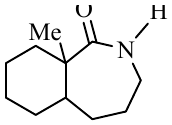 and 63\%
- (d)
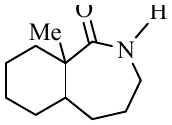 and 80\% GATE-2010
Show answer
Answer: (b)
Report an error in ABC26OR0472
Q6 · 2000-2022 · 2 marks
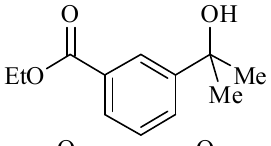
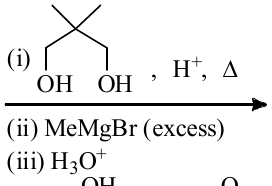
In the reaction, 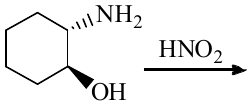 the major product [\mathrm{X}] is:
Show answer
Answer: (b)
Report an error in ABC26OR0473
Q7 · 2000-2022 · 2 marks
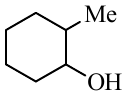
The major product formed in the following reaction is
- (a)
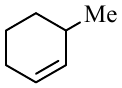
- (b)
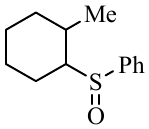
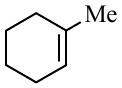
- (c)
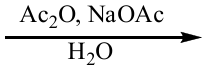
- (d)
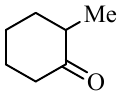 GATE-2016
Show answer
Answer: (d)
Report an error in ABC26OR0482
Q8 · 2000-2022 · 2 marks
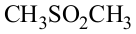
The products formed in the following reaction are 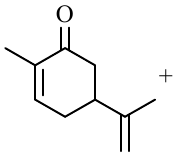


Show answer
Answer: (c)
Report an error in ABC26OR0524
Q9 · 2000-2022 · 2 marks
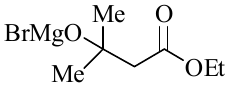
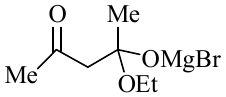
Reaction of ethyl acetoacetate with one equivalent of methylmagnesium bromide gives
- (a)
- (b)
- (c)
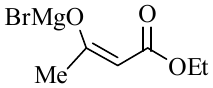
- (d)
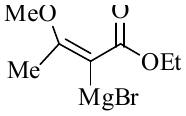 GATE 2005
Show answer
Answer: (a)
Report an error in ABC26OR0529
Q10 · 2000-2022 · 2 marks
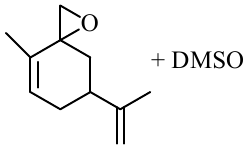
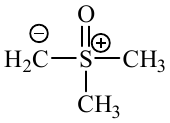
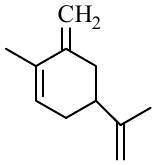
Which of the statement is CORRECT about the mechanism of the following reaction? 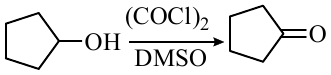
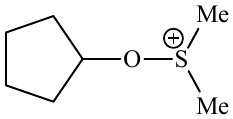
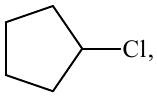
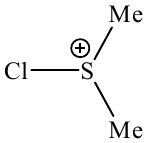
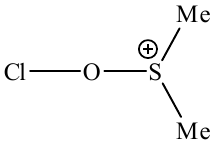
- (a) DMSO react with alcohol initially to give , which reacts with (\mathrm{COCl})_{2}.
- (b) (\mathrm{COCl})_{2} reacts with the alcohol initially to give which reacts with DMSO
- (c) DMSO reacts with (\mathrm{COCl})_{2} initially to give , which reacts with the alcohol.
- (d) (\mathrm{COCl})_{2} react with DMSO initially to give which reacts with the alcohol.
Show answer
Answer: (c)
Report an error in ABC26OR0531
Q11 · 2000-2022 · 2 marks
The reaction, 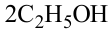
- (a)


 Birch reduction
- (b)
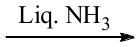

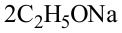 Clemmenson reduction
- (c) Wolff-Kishner reduction
- (d) hydride reduction
Show answer
Answer: (a)
Report an error in ABC26OR0534
Q12 · 2000-2022 · 2 marks
The major product P of the following reactions is 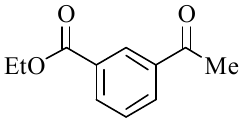

Show answer
Answer: (b)
Report an error in ABC26OR0538
Q13 · 2000-2022 · 2 marks
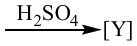
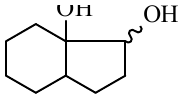
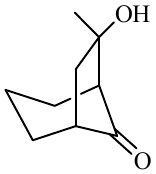
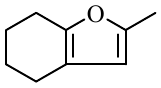
In the reaction sequence the major products X and Y, respectively are 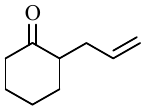
- (a)
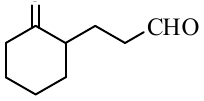 and
- (b)
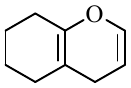
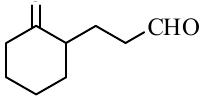 and
- (c)
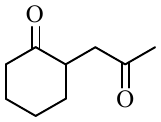 and
- (d)
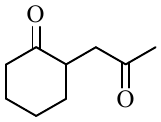 and GATE 2010
Show answer
Answer: (c)
Report an error in ABC26OR0543
Q14 · 2000-2022 · 2 marks
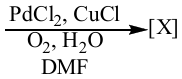
In the following reaction, 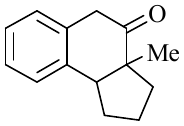
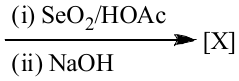 the major product [\mathrm{X}] is:
Show answer
Answer: (c)
Report an error in ABC26OR0548
Q15 · 2000-2022 · 2 marks
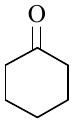
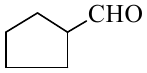
The mosjt appropriate sequence of reactions for carrying out the following conversion 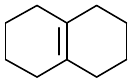

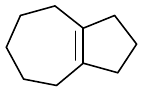 is
- (a) (i) Peracid; (ii) \mathrm{H}^{+}; (iii) Zn/dil. HCl
- (b) (i) Alkaline \mathrm{KMnO}_{4}; (ii) \mathrm{NaIO}_{4}; (iii) \mathrm{N}_{2} \mathrm{H}_{4} / \mathrm{KOH}
- (c) (i) Alkaline \mathrm{KMnO}_{4}; (ii) \mathrm{H}^{+}; (iii) \mathrm{Zn} / dil. HCl
- (d) (i) \mathrm{O}_{3} / \mathrm{Me}_{2} \mathrm{~S}; (ii) NaOEt ; (iii) \mathrm{N}_{2} \mathrm{H}_{4} / \mathrm{KOH}
Show answer
Answer: (d)
Report an error in ABC26OR0549
Q16 · 2000-2022 · 2 marks
1(E)-3-bromo-3-hexene when trated with \mathrm{CH}_{3} \mathrm{O}^{-}in \mathrm{CH}_{3} \mathrm{OH} gives
- (a) 3-hexyne
- (b) 2-hexyne
- (c) 2, 3-hexadiene
- (d) 2, 4-hexadiene
Show answer
Answer: (c)
Report an error in ABC26OR0627
Q17 · 2000-2022 · 2 marks
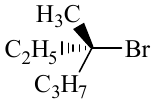
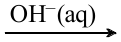
In the reaction, if the concentration of both the reactants is doubled, then the rate of the reaction will
- (a) remain unchanged
- (b)
 quadruple
- (c) reduce to one fourth
- (d) double GATE 2009
Show answer
Answer: (d)
Report an error in ABC26OR0643
Q18 · 2000-2022 · 2 marks
The major product formed in the following reaction is
- (a)
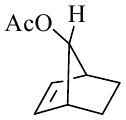
- (b)
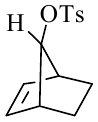
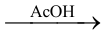
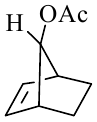
- (c)
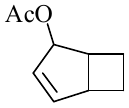
- (d)
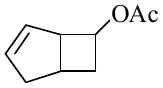 GATE 2020
Show answer
Answer: (b)
Report an error in ABC26OR0660

 ABC Chemistry
 CSIR NETChemical Science Coaching
 GATEChemical Science Preparation
 IIT JAMM.Sc Entrance Coaching
 CUET PGPost Graduate Entrance
 Class 11 ChemistryLive online
 Class 12 ChemistryLive onlineStudy LibraryPrevious year papers171 official papers · JAM, NET, GATE, CUETTopic-wise decks32 PDF + PPTX decks, freeBuild your own PDFChoose exam → topic → downloadStudy materialUnit-wise notes for the batchesTest papers 8–12School practice papersDreamer's QuizWeekly chemistry quizQuestions by topicRead online with verified answersSearchTopics, courses and articlesExam guidesSyllabus, pattern, eligibilityBlogChapter notes and PYQ analysisBooks by ABPeriodic table and data bookGreat Home TutorPh.DAboutContactBlogsQ&A▶️ YouTubeEnquiryBook a free demoCall +91 92121 42427