Q1 · 2000-2022 · 2 marks
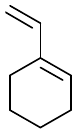
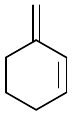
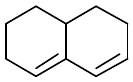
Order of reactivity of the following dienes X, Y and Z in Diels–Alder reaction is (X) (Y) (Z)
- (a) X>Z>Y
- (b)
 Y>X>Z
- (c)
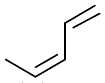
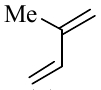 Y>Z>X
- (d) X>Y>Z
Show answer
Answer: (a)
Report an error in ABC26OR0553
Q2 · 2000-2022 · 2 marks
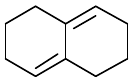
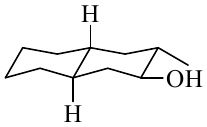
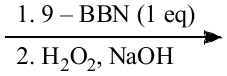
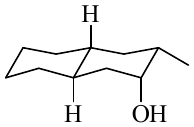
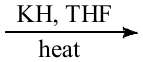
The major product P of the given reaction is 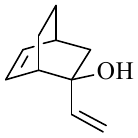
Show answer
Answer: (d)
Report an error in ABC26OR0554
Q3 · 2000-2022 · 2 marks
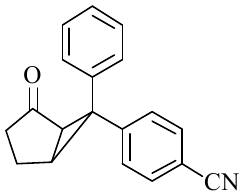
The major product P formed in the following photochemical reactionis 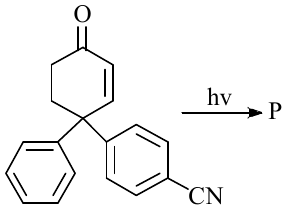
- (a)
- (b)
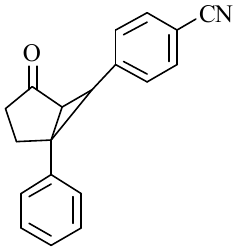
- (c)
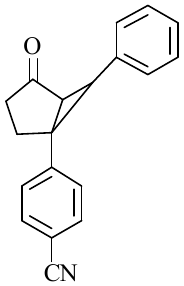
- (d)
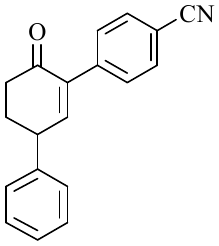 GATE-2006
Show answer
Answer: (b)
Report an error in ABC26OR0555
Q4 · 2000-2022 · 2 marks
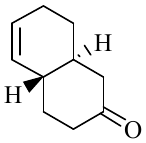
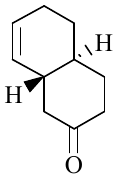
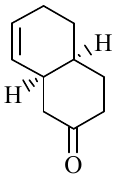
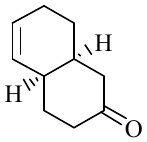
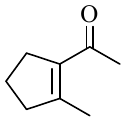
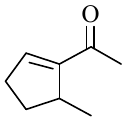
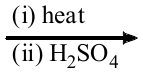
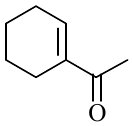
Identify the major product P and Q in the following reactions from the list of compounds I to IV. 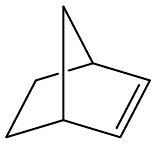
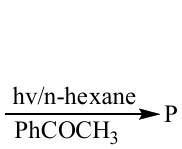
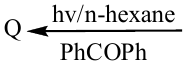
- (a)
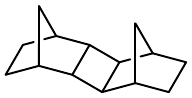 P:I and Q:II
- (b)
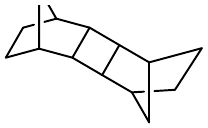
 P:II and Q:III
- (c)
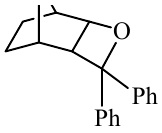
 P:IV and Q:II
- (d)
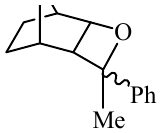
 P:IV and Q:III
Show answer
Answer: (c)
Report an error in ABC26OR0559
Q5 · 2000-2022 · 2 marks
The reaction between X and Y to give Z proceeds via 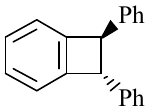
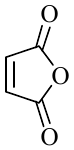
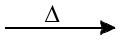
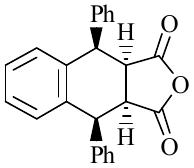


- (a) 4 \pi-conrotatory opening of X followed by endo Diels - Alder cycloaddition.
- (b) 4 \pi-disrotatory opening of X followed by endo Diels - Alder cycloaddition.
- (c) 4 \pi-conrotatory opening of X followed by exo Diels - Alder cycloaddition.
- (d) 4 \pi-disrotatory opening of X followed by exo Diels - Alder cycloaddition.
Show answer
Answer: (b)
Report an error in ABC26OR0561
Q6 · 2000-2022 · 2 marks
In the reaction, 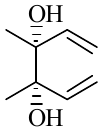
 the major product [X] is:
Show answer
Answer: (c)
Report an error in ABC26OR0568
Q7 · 2000-2022 · 2 marks
The diene which undergoes Diels-Alder reaction with maleic anhydride is:
Show answer
Answer: (b)
Report an error in ABC26OR0571
Q8 · 2000-2022 · 2 marks
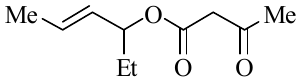
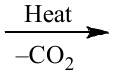
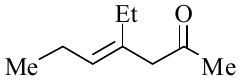
In the following reaction, the major product [X] is:
- (a)
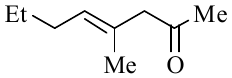
- (b)

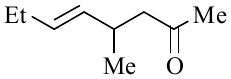
- (c)
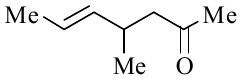
- (d)
 GATE-2012
Show answer
Answer: (a)
Report an error in ABC26OR0572
Q9 · 2000-2022 · 2 marks
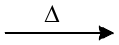
The pericyclic reaction given below is an example of
- (a) [1,3]–sigmatropic shift
- (b)
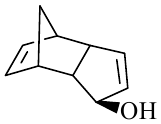
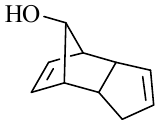 [1,5]–sigmatropic shift
- (c) [3,5]–sigmatropic shift
- (d) [3,3]–sigmatropic shift
Show answer
Answer: (b)
Report an error in ABC26OR0574
Q10 · 2000-2022 · 2 marks
The major product X and Y formed in the following reaction sequence are cis - stilbene \xrightarrow[\mathrm{C}_{6} \mathrm{H}_{12}]{\mathrm{hv}} \xrightarrow[\text { air }]{\mathrm{I}_{2}} \mathrm{Y} 
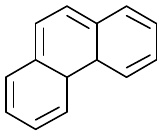
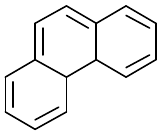
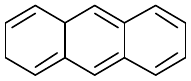
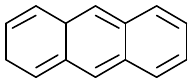
- (a) \mathrm{X}=

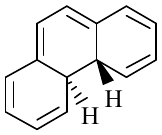
- (b) \mathrm{X}=
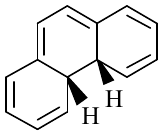 Y=
- (c)
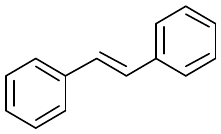 \mathrm{X}= \mathrm{Y}=
- (d) \mathrm{X}=
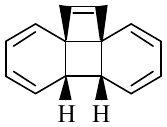 \mathrm{Y}= GATE-2015
Show answer
Answer: (a)
Report an error in ABC26OR0579
Q11 · 2000-2022 · 2 marks
In the two setp reaction sequence given below, the starting bis - sulfone acts as 
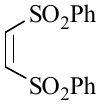
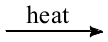
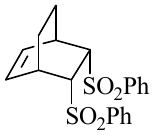
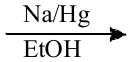


- (a) a dienophile and synthetic equivalent of acetylene
- (b) a dienophile and synthetic equivalent of ethylene
- (c) a dipolarophile and synthetic equivalent of acetylene
- (d) a dipolarophile and synthetic equivalent of ethylene
Show answer
Answer: (d)
Report an error in ABC26OR0582
Q12 · 2000-2022 · 2 marks
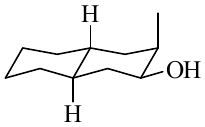
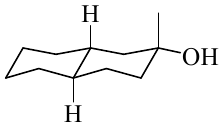
The result of the reduction of either (R) or (S) 2-methylcyclohexanone, in separate reactions, using \mathrm{LiAlH}_{4} is that the reduction of
- (a) The R enantiomer is stereoselective
- (b) The R enantiomer is stereospecific
- (c) The S enantiomer is stereospecific
- (d) Both the R and S enantiomers is stereoselective
Show answer
Answer: (d)
Report an error in ABC26OR0666
Q13 · 2000-2022 · 2 marks
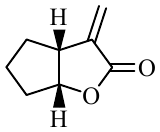
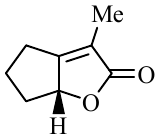
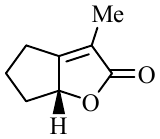
In the reaction sequence 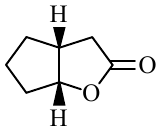
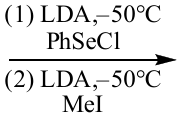

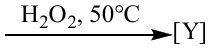 the major product respectively, are:
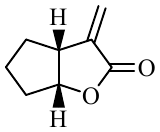
- (a)
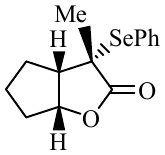 and
- (b)
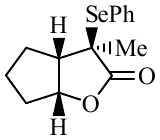 and
- (c)
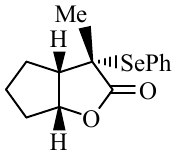 and
- (d)
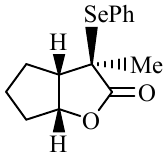 and
Show answer
Answer: (a)
Report an error in ABC26OR0673
Q14 · 2000-2022 · 2 marks
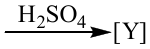
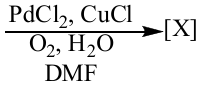
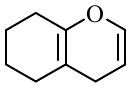
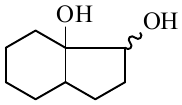
In the reaction sequence the major products X and Y , respectively are 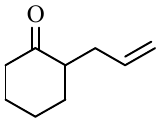
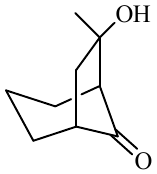
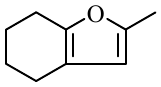
- (a)
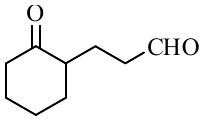 and
- (b)
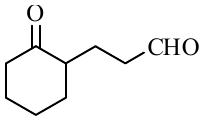 and
- (c)
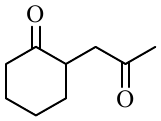 and
- (d)
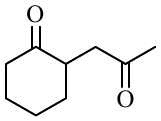 and GATE-2010
Show answer
Answer: (c)
Report an error in ABC26OR0674
Q15 · 2000-2022 · 2 marks
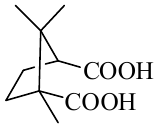
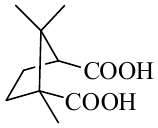
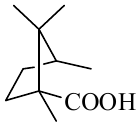
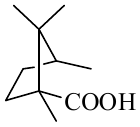
In the reaction, 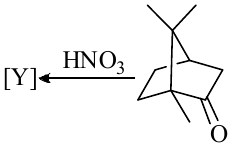
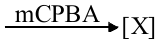 the major products, [\mathrm{X}] and [\mathrm{Y}], respectively, are
- (a)
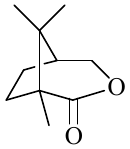 and
- (b)
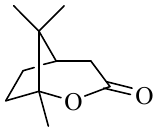 and
- (c)
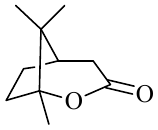 and
- (d)
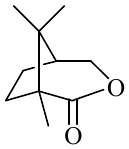 and
Show answer
Answer: (b)
Report an error in ABC26OR0675
Q16 · 2000-2022 · 2 marks
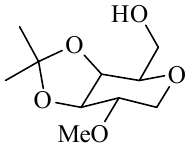
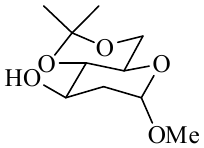
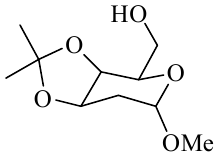
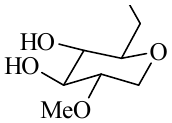
In the reaction sequence 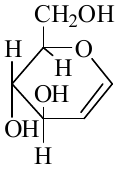
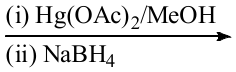

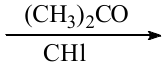
 the major products, [\mathrm{X}] and [\mathrm{Y}] respectively, are
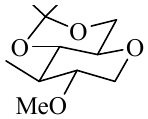
- (a)
 and
- (b)
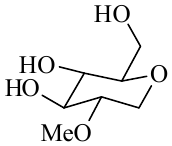 and
- (c)
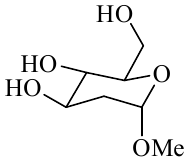 and
- (d)
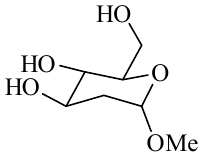 and GATE-2011
Show answer
Answer: (c)
Report an error in ABC26OR0676
Q17 · 2000-2022 · 2 marks
In the following reaction 


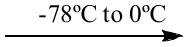
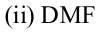 the major product [\mathrm{X}] is:
- (a)
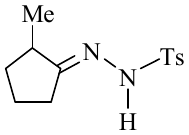
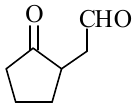 (i) Peracid; (ii) \mathrm{H}^{+}; (iii) \mathrm{Zn} / \mathrm{dil} . \mathrm{HCl}
- (b)

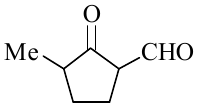 (i) Alkaline \mathrm{KMnO}_{4}; (ii) \mathrm{NaIO}_{4}; (iii) \mathrm{N}_{2} \mathrm{H}_{4} / \mathrm{KOH}
- (c)
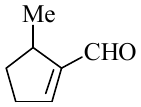 (i) Alkaline \mathrm{KMnO}_{4}; (ii) \mathrm{H}^{+}; (iii) \mathrm{Zn} / dil. HCl
- (d)
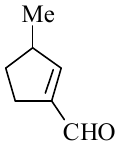 is (i) \mathrm{O}_{2} / \mathrm{Me}{ }_{2} \mathrm{~S}; (ii) NaOEt ; (iii) \mathrm{N}_{2} \mathrm{H}_{4} / \mathrm{KOH}
Show answer
Answer: (c)
Report an error in ABC26OR0677
Q18 · 2000-2022 · 2 marks
The most appropriate sequence of reactions for carrying out the following conversion 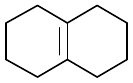

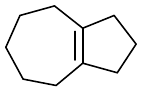 is
- (a) (i) Peracid; (ii) \mathrm{H}^{+}; (iii) \mathrm{Zn}/\text{dil.}\ \mathrm{HCl}
- (b) (i) Alkaline \mathrm{KMnO}_{4}; (ii) \mathrm{NaIO}_{4}; (iii) \mathrm{N}_{2}\mathrm{H}_{4}/\mathrm{KOH}
- (c) (i) Alkaline \mathrm{KMnO}_{4}; (ii) \mathrm{H}^{+}; (iii) \mathrm{Zn}/\text{dil.}\ \mathrm{HCl}
- (d) (i) \mathrm{O}_{3}/\mathrm{Me}_{2}\mathrm{S}; (ii) \mathrm{NaOEt}; (iii) \mathrm{N}_{2}\mathrm{H}_{4}/\mathrm{KOH}
Show answer
Answer: (d)
Report an error in ABC26OR0678
Q19 · 2000-2022 · 2 marks
Identify the product from the following reaction 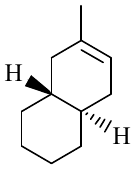

Show answer
Answer: (a)
Report an error in ABC26OR0681
Q20 · 2000-2022 · 2 marks
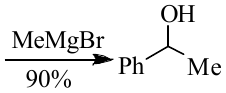
The overall yield (in \%) for the following reaction sequence is 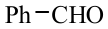

Show answer
Answer: 57.6
Report an error in ABC26OR0686
Q21 · 2000-2022 · 2 marks
The most suitable reagent combination to effect the following conversion is 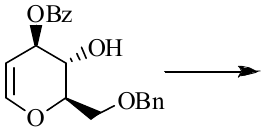
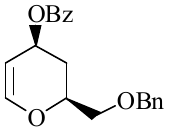
- (a) (i) \mathrm{NaH}, \mathrm{CS}_{2}, then MeI; (ii) \mathrm{Bu}_{3} \mathrm{SnH}, \mathrm{AlBN}, \mathrm{C}_{6} \mathrm{H}_{6}, Reflux
- (b) (i) \mathrm{I}_{2}, \mathrm{PPh}_{3}, imidazole; (ii) \mathrm{H}_{2}, 10 \% \mathrm{Pd}-\mathrm{C}, \mathrm{AcOH}, high pressure
- (c) (i) \mathrm{Me}_{3} \mathrm{SiCl}, pyridine, DMAP; (ii) \mathrm{Bu}_{3} \mathrm{SnH}, \mathrm{AlBN}, \mathrm{C}_{6} \mathrm{H}_{6}, reflux
- (d) (i) MsCl , pyridine, DMAP ; (ii) \mathrm{LiAlH}_{4}, \mathrm{THF}, reflux
Show answer
Answer: (a)
Report an error in ABC26OR0687
Q22 · 2000-2022 · 2 marks
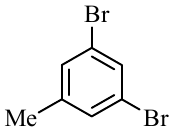
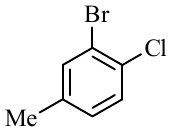
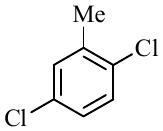
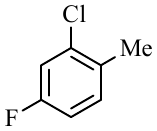
The mass spectrum of a dihalo compound shows peaks with relative intensities of 1:2:1 corresponding to \mathrm{M}, \mathrm{M}+2 and \mathrm{M}+4 (\mathrm{M} is the mass of the molecular ion), respectively. The compound is
Show answer
Answer: (a)
Report an error in ABC26OR0690
Q23 · 2000-2022 · 2 marks
For the following three alkenes, 1,2 , and 3 , the rates of hydrogeneation using Wilkinson's catalyst at 20^{\circ} \mathrm{C} vary in the order 1 2 3
- (a) 1>3>2
- (b)
 1>2>3
- (c)
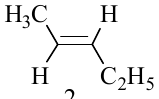 2>1>3
- (d)
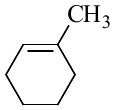 2>3>1
Show answer
Answer: (b)
Report an error in ABC26OR0694
Q24 · 2000-2022 · 2 marks
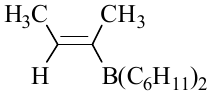
Hydroboration of 2 - butyne with \left(\mathrm{C}_{6} \mathrm{H}_{11}\right)_{2} \mathrm{BH} yields the intermediate U , which on treatment with \mathrm{I}_{2} and NaOMe at -78^{\circ} \mathrm{C}, gives product V. The structure of U and V are 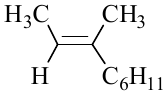
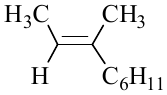
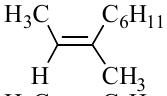
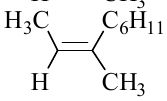
- (a) \mathrm{U}=
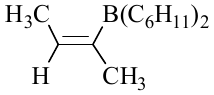 \mathrm{V}=
- (b) \mathrm{U}=
 V =
- (c) \mathrm{U}=
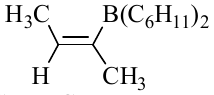 \mathrm{V}=
- (d)
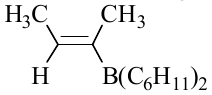 V =
Show answer
Answer: (d)
Report an error in ABC26OR0695
Q25 · 2000-2022 · 2 marks
The major product formed in the following reaction sequence is 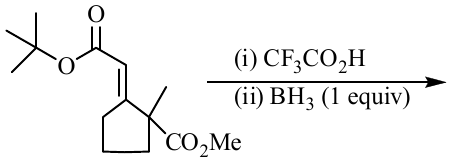
- (a)
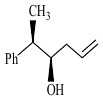
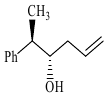
- (b)
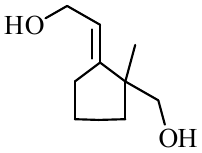
- (c)
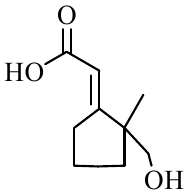
- (d)
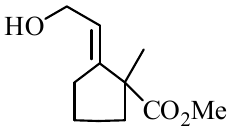 GATE-2019
Show answer
Answer: (d)
Report an error in ABC26OR0698
Q26 · 2000-2022 · 2 marks
Character table of point group \mathrm{D}_{8} is given below Value of (a+b+c+d+e+f+g+h+i+j+k) is equal to ____ Show answer
Answer: 9
Report an error in ABC26OR0699
Q27 · 2000-2022 · 2 marks
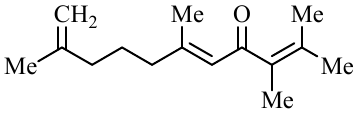
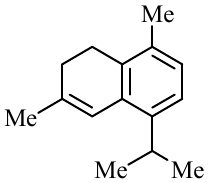
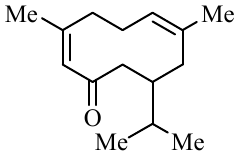
Major product formed in the following synthetic sequence is: 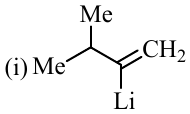
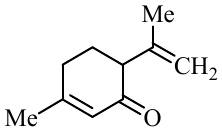

- (a)
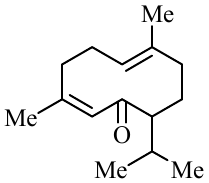
- (b)
- (c)
- (d)
 GATE-2021
Show answer
Answer: (a)
Report an error in ABC26OR0703
 ABC Chemistry
 CSIR NETChemical Science Coaching
 GATEChemical Science Preparation
 IIT JAMM.Sc Entrance Coaching
 CUET PGPost Graduate Entrance
 Class 11 ChemistryLive online
 Class 12 ChemistryLive onlineStudy LibraryPrevious year papers171 official papers · JAM, NET, GATE, CUETTopic-wise decks32 PDF + PPTX decks, freeBuild your own PDFChoose exam → topic → downloadStudy materialUnit-wise notes for the batchesTest papers 8–12School practice papersDreamer's QuizWeekly chemistry quizQuestions by topicRead online with verified answersSearchTopics, courses and articlesExam guidesSyllabus, pattern, eligibilityBlogChapter notes and PYQ analysisBooks by ABPeriodic table and data bookGreat Home TutorPh.DAboutContactBlogsQ&A▶️ YouTubeEnquiryBook a free demoCall +91 92121 42427