Q1 · 2005-2022 · 2 marks
Metal-carbon multiple bonds in metal carbonyl are preferably identified from the stretching frequency of
- (a) Carbon-oxygen bond
- (b) Metal-carbon bond
- (c) Metal-oxygen bond
- (d) Carbon-carbon bond IIT JAM 2009
Show answer
Answer: (a)
Report an error in ABC26IN0749
Q2 · 2005-2022 · 2 marks
\mathrm{B}_{2} \mathrm{H}_{6} and \mathrm{B}_{4} \mathrm{H}_{10}, respectively, are examples of
- (a) Nido and arachno boranes
- (b) Nido and closo boranes
- (c) Closo and arachno boranes
- (d) Nido boranes IIT JAM 2012
Show answer
Answer: (a)
Report an error in ABC26IN0750
Q3 · 2005-2022 · 2 marks
The Correct order of CO vibrational stretching frequency in the following complexes is (I) \left(\mathrm{PF}_{3}\right)_{3} \mathrm{Mo}(\mathrm{CO})_{3} (II) \left(\mathrm{PCl}_{3}\right)_{3} \mathrm{Mo}(\mathrm{CO})_{3} (III) \left\{\mathrm{P}(\mathrm{OMe})_{3}\right\}_{3} \mathrm{Mo}(\mathrm{CO})_{3}
- (a) I < II < III
- (b) III < II < I
- (c) II < I < III
- (d) III < I < II IIT JAM 2014
Show answer
Answer: (b)
Report an error in ABC26IN0752
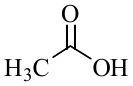
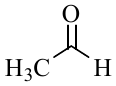
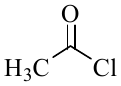
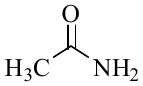
Q4 · 2005-2022 · 2 marks
The carbonyl stretching frequency \left(v_{\mathrm{C}=\mathrm{O}}\right) is highest for:
Show answer
Answer: (c)
Report an error in ABC26IN0753
Q5 · 2005-2022 · 2 marks
For the following reactions, the metal complexes X and Y are (i) \mathrm{Ni}(\mathrm{s}) \xrightarrow[1 \mathrm{~atm} / 25^{\circ} \mathrm{C}]{\mathrm{CO}(\mathrm{g})} \mathrm{X} (ii) \mathrm{FeCl}_{2} \xrightarrow{2 \mathrm{NaC}_{5} \mathrm{H}_{5}} \mathrm{Y}
- (a) \mathrm{X}=\mathrm{Ni}(\mathrm{CO})_{4} ; \mathrm{Y}=\mathrm{Fe}\left(\eta^{5}-\mathrm{C}_{5} \mathrm{H}_{5}\right)_{2}
- (b) \mathrm{X}=\mathrm{Ni}(\mathrm{CO})_{4} ; \mathrm{Y}=\mathrm{Fe}\left(\eta^{1}-\mathrm{C}_{5} \mathrm{H}_{5}\right)_{2}
- (c) \mathrm{X}=\mathrm{Ni}(\mathrm{CO})_{5} ; \mathrm{Y}=\mathrm{Fe}\left(\eta^{5}-\mathrm{C}_{5} \mathrm{H}_{5}\right)_{2}
- (d) \mathrm{X}=\mathrm{Ni}(\mathrm{CO})_{6} ; \mathrm{Y}=\mathrm{Fe}\left(\eta^{1}-\mathrm{C}_{5} \mathrm{H}_{5}\right)_{2} IIT JAM 2015
Show answer
Answer: (a)
Report an error in ABC26IN0755
Q6 · 2005-2022 · 2 marks
The value of 'x' in \left[\mathrm{Cu}(\mathrm{CO})_{\mathrm{x}}\right]^{+}such that it obeys the 18 electron rule is
Show answer
Answer: (c)
Report an error in ABC26IN0757
Q7 · 2005-2022 · 2 marks
The homogeneous catalyst used in water-gas shift reaction is
- (a) \mathrm{PdCl}_{2}
- (b) \mathrm{Cr}_{2} \mathrm{O}_{3}
- (c) \left[\mathrm{RhCl}\left(\mathrm{PPh}_{3}\right)_{3}\right]
- (d) \left[\mathrm{RuCl}_{2}(\text { bipyridyl })_{2}\right]
Show answer
Answer: (d)
Report an error in ABC26IN0759
Q8 · 2005-2022 · 2 marks
Among the following metal carbonyl species, the one with the highest metal-carbon back bonding is
- (a) \left[\mathrm{Ti}(\mathrm{CO})_{6}\right]^{2-}
- (b) \left[\mathrm{V}(\mathrm{CO})_{6}\right]^{-}
- (c) \mathrm{Cr}(\mathrm{CO})_{6}
- (d) \left[\mathrm{Mn}(\mathrm{CO})_{6}\right]^{+}
Show answer
Answer: (a)
Report an error in ABC26IN0760
Q9 · 2005-2022 · 2 marks
The correct option having one complex from each of the following pairs which is more reactive towards the oxidative addition reaction by hydrogen molecule is Pair 1: \mathrm{IrCl}\left(\mathrm{PMe}_{3}\right)_{3}(\mathrm{I}) and \mathrm{IrCl}(\mathrm{CO})\left(\mathrm{PMe}_{3}\right)_{2}(\mathrm{II}) Pair 2: \mathrm{IrCl}(\mathrm{CO})\left(\mathrm{PPh}_{3}\right)_{2} (III) and \mathrm{IrCl}_{3}\left(\mathrm{PPh}_{3}\right) (IV)
- (a) (I) and (III)
- (b) (I) and (IV)
- (c) (II) and (III)
- (d) (II) and (IV)
Show answer
Answer: (a)
Report an error in ABC26IN0762
Q10 · 2005-2022 · 2 marks
Number of vertices in an icosahedral closo-borane is ____ . IIT JAM 2020
Show answer
Answer: 12
Report an error in ABC26IN0764
Q11 · 2005-2022 · 2 marks
The order of the \mathrm{M}-\mathrm{C} bond strength in the following species is (Atomic number for \mathrm{Cr}=24, \mathrm{Mn}=25, \mathrm{Ti}=22, \mathrm{Co}=27 ) - (a) II > I > IV > III
- (b) I > III > II > IV
- (c) III > IV > I > II
- (d) III > I > II > IV
Show answer
Answer: (c)
Report an error in ABC26IN0765
Q12 · 2005-2022 · 2 marks
The complex which does NOT obey 18 - electron rule is (atomic number for \mathrm{Mn}=25, \mathrm{Fe}=26, \mathrm{Co}=27, \mathrm{Ru}=44 )
- (a) \left[\mathrm{Co}_{2}(\mathrm{CO})_{8}\right]
- (b) \left[\mathrm{Fe}(\mathrm{CO})_{4}\right]^{2-}
- (c) \left[\mathrm{HMn}(\mathrm{CO})_{5}\right]
- (d) \left[\left(\eta^{5}-\mathrm{C}_{5} \mathrm{H}_{5}\right) \mathrm{RuCl}(\mathrm{CO})\left(\mathrm{PPh}_{2}\right)\right]
Show answer
Answer: (d)
Report an error in ABC26IN0767
Q13 · 2005-2022 · 2 marks
The CORRECT order of \mathrm{pK}_{\mathrm{a}} for the compounds I to IV in water at 298 K is \underset{\mathbf{I}}{\mathrm{HCo}}(\mathrm{CO})_{4} \underset{\text { II }}{\mathrm{HCo}(\mathrm{CO})_{3}\left(\mathrm{PPh}_{3}\right)} \underset{\text { III }}{\mathrm{HCo}(\mathrm{CO})_{3}\left(\mathrm{P}(\mathrm{OPh})_{3}\right)} \underset{\text { IV }}{\mathrm{HCo}(\mathrm{CO})_{2}\left(\mathrm{PPh}_{3}\right)_{2}}
- (a) I > III > II > IV
- (b) IV > II > III > I
- (c) IV > III > II > I
- (d) I > II > III > IV
Show answer
Answer: (d)
Report an error in ABC26IN0769
Q14 · 2005-2022 · 2 marks
The complex that does NOT obey the 18-electron rule is (Given: Atomic numbers of Ti, Mn, Ta and Ir are 22, 25, 73 and 77, respectively)
- (a) \left[\left(\eta^{5}-\mathrm{C}_{5} \mathrm{H}_{5}\right) \mathrm{Ti}(\mathrm{CO})_{4}\right]^{-}
- (b) \left[\mathrm{TaCl}_{3}\left(\mathrm{PEt}_{3}\right)_{2}\left(\mathrm{CHCMe}_{3}\right)\right]
- (c) \left[\mathrm{Mn}\left(\mathrm{SnPh}_{3}\right)_{2}(\mathrm{CO})_{4}\right]^{-}
- (d) \left[\left(\eta^{5}-\mathrm{C}_{5} \mathrm{H}_{5}\right) \operatorname{Ir}\left(\mathrm{CH}_{2}\right)\left(\mathrm{PMe}_{3}\right)\right]
Show answer
Answer: (b)
Report an error in ABC26IN0770
Q15 · 2005-2022 · 2 marks
The decreasing order of \mathrm{C}=\mathrm{C} bond length in the following complexes is - (a) \mathrm{II}>\mathrm{III}>\mathrm{IV}>\mathrm{I} \mathrm{CpMo}(\mathrm{CO})_{3} and \mathrm{CpW}(\mathrm{CO})_{3} are isoelectronic (where Cp is cyclopentadienyl)
- (b) \mathrm{IV}>\mathrm{II}>\mathrm{III}>\mathrm{I} \mathrm{BH} and \mathrm{CH} are isolobal and isoelectronic
- (c) \mathrm{II}>\mathrm{IV}>\mathrm{III}>\mathrm{I} \mathrm{CH}_{3} and \mathrm{Mn}(\mathrm{CO})_{5} are isolobal
- (d) \mathrm{IV}>\mathrm{II}>\mathrm{I}>\mathrm{III} \mathrm{CH}_{2}^{-} and \mathrm{NH}_{2} are isolobal and isoelectronic IIT JAM 2022
Show answer
Answer: (c)
Report an error in ABC26IN0771
Q16 · 2005-2022 · 2 marks
The structure types of \mathrm{B}_{10} \mathrm{H}_{10}{ }^{2-} and \mathrm{B}_{10} \mathrm{H}_{14}, respectively, are
- (a) closo and nido
- (b) nido and arachno
- (c) nido and closo
- (d) closo and arachno
Show answer
Answer: (a)
Report an error in ABC26IN0773
Q17 · 2005-2022 · 2 marks
The order of increasing CO stretching frequencies in \left[\mathrm{Co}(\mathrm{CO})_{4}\right]^{-},\left[\mathrm{Cu}(\mathrm{CO})_{4}\right]^{+},\left[\mathrm{Fe}(\mathrm{CO})_{4}\right]^{2-} and \left[\mathrm{Ni}(\mathrm{CO})_{4}\right] is
- (a) \left[\mathrm{Cu}(\mathrm{CO})_{4}\right]^{+}<\left[\mathrm{Ni}(\mathrm{CO})_{4}\right]<\left[\mathrm{Co}(\mathrm{CO})_{4}\right]^{-}<\left[\mathrm{Fe}(\mathrm{CO})_{4}\right]^{2-}
- (b) \left[\mathrm{Fe}(\mathrm{CO})_{4}\right]^{2-}<\left[\mathrm{Co}(\mathrm{CO})_{4}\right]^{-}<\left[\mathrm{Ni}(\mathrm{CO})_{4}\right]<\left[\mathrm{Cu}(\mathrm{CO})_{4}\right]^{+}
- (c) \left[\mathrm{Co}(\mathrm{CO})_{4}\right]^{-}<\left[\mathrm{Fe}(\mathrm{CO})_{4}\right]^{2-}<\left[\mathrm{Cu}(\mathrm{CO})_{4}\right]^{+}<\left[\mathrm{Ni}(\mathrm{CO})_{4}\right]
- (d) \left[\mathrm{Ni}(\mathrm{CO})_{4}\right]<\left[\mathrm{Cu}(\mathrm{CO})_{4}\right]^{+}<\left[\mathrm{Co}(\mathrm{CO})_{4}\right]^{-}<\left[\mathrm{Fe}(\mathrm{CO})_{4}\right]^{2-}
Show answer
Answer: (b)
Report an error in ABC26IN0774
Q18 · 2005-2022 · 2 marks
The number of CO stretching bands in the infrared spectrum of \mathrm{Fe}(\mathrm{CO})_{5} is
Show answer
Answer: (b)
Report an error in ABC26IN0775