





Brook rearrangement: Mechanism of silyl migration
Learn the base-induced Brook rearrangement, follow electron movement, and solve two original practice questions with a short revision plan.
Learn how base initiates a carbon-to-oxygen silyl shift.
Then use two worked practice questions to connect the mechanism with exam problem-solving.
Recognise the starting arrangement
Start by locating an alcohol group and a carbon–silicon bond on the same carbon. A useful general structure is R3Si–CH(OH)–R′. Here, R and R′ represent organic groups. A silyl group is a silicon-containing substituent such as Si(CH3)3. In the forward Brook rearrangement, this group transfers from carbon to oxygen.
The label 1,2 tells you that the transfer occurs between adjacent atoms: the carbon bearing silicon and its attached oxygen. It does not mean that silicon moves along two carbon atoms. Draw the C–O connection before drawing any arrows. This small step prevents a common error in identifying the migration pathway.
The broader Brook rearrangement includes carbon-to-oxygen silyl migrations over other distances and under other conditions. Here, keep your attention on the base-induced 1,2-anionic pathway. Anionic means that negatively charged species participate in the mechanism. Formation of a strong silicon–oxygen bond helps favour the forward rearrangement, although the substrate and conditions also matter.
Follow the electron pairs through the mechanism
Use three stages: remove the hydroxyl proton, transfer silicon, and trap the carbon anion. An alkoxide is the negatively charged oxygen species obtained when an alcohol loses H+. A carbanion is a species with a negatively charged carbon. Keep these two intermediates separate in your working.
- Generate the alkoxide. A suitable base removes the O–H proton. Draw an arrow from the base to that proton and another from the O–H bond to oxygen. The C–Si bond remains intact at this stage.
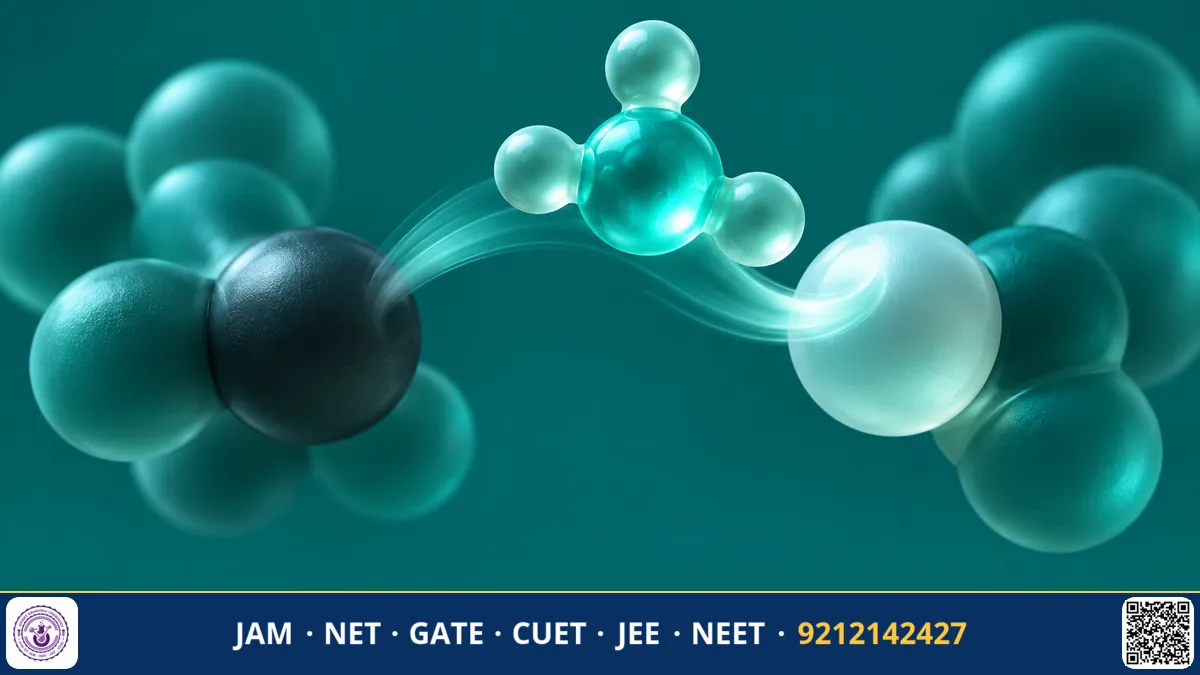
- Transfer the silyl group. Draw an arrow from an oxygen lone pair to silicon. At the same time, direct the C–Si bond electron pair towards carbon. The new O–Si bond forms as the original C–Si bond breaks.
- Trap the carbanion. If a suitable proton donor is supplied, the carbon anion accepts a proton. Other specified electrophiles can give different products. An electrophile is an electron-pair acceptor.
The migration is intramolecular: oxygen attacks silicon within the same molecule. Its proposed transition state involves the O–C–Si unit, with silicon temporarily pentacoordinate, meaning associated with five groups. A transition state is the high-energy arrangement along a reaction pathway, rather than an intermediate that should automatically be drawn as an isolable species.
General reaction sequence: R3Si–CH(OH)–R′ → R3Si–CH(O−)–R′ → R3Si–O–C−(H)–R′ → R3Si–O–CH2–R′ after protonation.
Check charge after each stage. Rearrangement transfers the negative charge from oxygen to carbon; it does not remove that charge. Also, the migrating group does not leave as a free silyl cation. Keep bond formation and bond cleavage connected when drawing the migration arrows.
Use the mechanism to eliminate exam options
For CSIR-NET, GATE, IIT-JAM and CUET-PG preparation, practise recognising the reactive arrangement inside a larger structure. A question may test the intermediate, the product after work-up, or the location of an isotopic label. Read the reagents and work-up before selecting a final structure.
Use the following checks when two options look similar. They force you to track connectivity, charge and the atom supplied during work-up, rather than selecting a familiar-looking product.
| Checkpoint | Correct interpretation | Error to reject |
|---|---|---|
| Initial base action | O–H deprotonation generates an alkoxide | Removing silicon without forming the required oxygen nucleophile |
| Migration direction | Silicon transfers from carbon to oxygen | Moving an alkyl group instead of the silyl group |
| Immediate product | A carbon anion bearing an O–Si linkage | A neutral product before any trapping step |
| Protonating work-up | The carbon anion receives hydrogen | Breaking the O–Si bond without supporting conditions |
If stereochemistry is explicitly tested, the supplied account describes retention at a stereogenic silicon centre. Retention means preservation of its spatial arrangement during migration. Do not equate this automatically with an unchanged R/S label, because substituent priorities can change. For carbon stereochemistry, inspect the complete sequence and any subsequent trapping step before assigning the final configuration.
Solve two original practice questions
These are original practice questions, not past-paper questions. Their qids are identifiers for this article’s practice set. Attempt each question before reading its solution. Use the chemistry question bank to continue chapter-based revision, and keep these worked solutions in your mechanism notes.
Practice question 1 — qid BR-P01: (CH3)3Si–CH2–OH undergoes O–H deprotonation, followed by a 1,2-Brook rearrangement. A proton donor then traps the resulting carbon anion. Assuming the O–Si bond remains intact during trapping, identify the final organic product and explain its formation.
Step 1: Deprotonation gives (CH3)3Si–CH2–O−. Oxygen carries the negative charge. The carbon still has its original two hydrogen atoms and its bond to silicon.
Step 2: Oxygen attacks silicon while the C–Si bond electrons move onto carbon. The rearranged anion is (CH3)3Si–O–CH2−. Notice that oxygen now bridges silicon and carbon.
Step 3: Carbon accepts a proton, producing (CH3)3Si–O–CH3. This is a silyl ether, containing a silicon–oxygen–carbon linkage. Carbon gains one hydrogen during trapping.
Answer check: All silicon-bound methyl groups remain attached to silicon. The starting hydroxymethyl carbon becomes the methyl carbon attached to oxygen. No carbon atom disappears.
Practice question 2 — qid BR-P02: Consider C6H5–CH(OH)–Si(CH3)3. After O–H deprotonation and Brook rearrangement, the carbon anion is immediately quenched with D2O. Predict the labelled product. Assume no competing reaction or later isotope exchange. D represents deuterium, an isotope of hydrogen.
Step 1: Remove the hydroxyl proton to obtain C6H5–CH(O−)–Si(CH3)3. The phenyl group, C6H5, remains attached to the same carbon throughout the sequence.
Step 2: Transfer Si(CH3)3 from carbon to oxygen. The intermediate becomes C6H5–C−(H)–O–Si(CH3)3. Carbon retains its original hydrogen and now carries the negative charge.
Step 3: The carbon anion abstracts D from D2O. The product is C6H5–CH(D)–O–Si(CH3)3. Deuterium occupies the new bond formed during quenching.
Answer check: Do not place D on oxygen as the defining product label. Oxygen has already formed the O–Si bond. The reactive carbon receives D because it carries the negative charge immediately before quenching.
Build a short revision plan
- First session: Redraw the three-stage mechanism without notes. Explain aloud where each electron pair starts and ends.
- Next session: Repeat BR-P01 and BR-P02. Change only the stated quenching reagent and predict what carbon receives.
- Practice session: Use chapter-based question-bank revision for rearrangements. For every error, record whether you missed the starting arrangement, migration direction, charge or work-up.
- Final review: Redraw only the incorrect mechanisms. Verify atom conservation and charge before checking the answer.
Key takeaways
- Generate an alkoxide before drawing the base-induced silyl shift.
- Form O–Si while breaking C–Si towards carbon.
- Track the carbon anion through the stated trapping step.
- Use isotope labelling to identify where the final bond forms.
Frequently asked questions
Why does silicon migrate towards oxygen?
Formation of the strong silicon–oxygen bond helps favour the forward rearrangement. The alkoxide supplies the electron pair that attacks silicon.
Is the immediate rearrangement product neutral?
No. The oxygen anion becomes a carbon anion during migration. A subsequent trapping step determines the final product.
Does every Brook rearrangement require base?
No. Brook rearrangements can occur under other conditions. The mechanism discussed here is specifically the base-induced anionic 1,2 pathway.
Can I predict the product from the migration alone?
You can identify the rearranged anion. To predict the final isolated product, also read the trapping reagent and work-up conditions.